






🇳🇿 Travel eSIM plans for New Zealand

From just S$2.99/day*
  • Data without limits
  • 7 days of validity
  • Fast and reliable connectivity
  • Stop paying roaming fees
  • QR code sent to your email
Get started with unlimited data
Length of trip
Longer trips, better value!
7
How many eSIMs
Buy more eSIMs, save more
1
Load your eSIM before you go or while you're away. Your plan starts when you land at your destination and switch on your eSIM.

* Lowest per-day price is based on the longest unlimited data plan available.

Paying securely
Visa Mastercard PayPal Amex Diners JCB
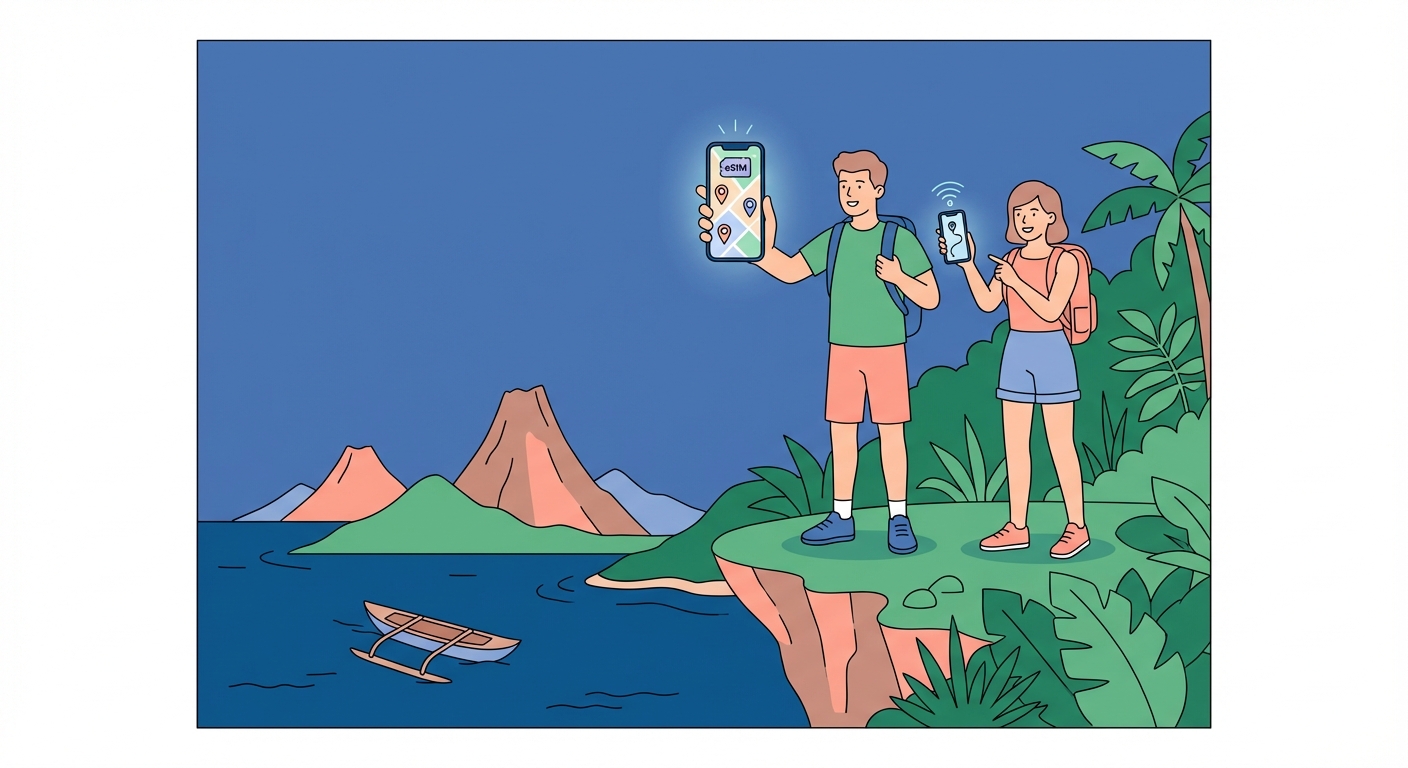
New Zealand eSIM travel illustration

Why go with us?

Learn how TPG Mobile compared to other choices in New Zealand.

TPG Mobile
Local SIM card
Roaming
Unlimited data options
Works right away
Keep your current number
No surprise charges
No lock-in
24/7 support
Pacific eSIM

Explore the Region with Pacific eSIM

Cover New Zealand and all nearby destinations on a single regional eSIM — no swapping SIMs, no hidden charges. Starting from S$2.49.

View Pacific Plans
🇳🇿

eSIM pricing for New Zealand

All pricing in SGD

7 days of unlimited data in New Zealand costs S$22.45 — about S$3.21 a day on One NZ, Spark or 2degrees, with no roaming charge and no SIM to swap. In New Zealand, 5G is live and median mobile download speed is 53.9 Mbps.

Duration Price Daily rate
1 day S$5.25 S$5.25/day
3 days S$10.75 S$3.58/day
5 days S$16.59 S$3.32/day
7 days S$22.45 S$3.21/day
10 days S$31.23 S$3.12/day
15 days S$45.85 S$3.06/day
30 days S$89.75 S$2.99/day
180 days S$77.90 S$0.43/day
🇳🇿

Which New Zealand eSIM plan fits your trip?

Choose your New Zealand eSIM by matching the allowance and validity period to your trip, then compare the selected product details with the local network, band and speed references already shown on this page.

Start with the length of your stay, then allow for navigation, messaging, streaming and work use. Each option below is a plan size that is currently available for this destination.

Short trip

1 GB / 7 days

Best for: A short visit with maps, messages and occasional browsing.

This option pairs the 1 GB allowance with a stated validity period of 7 days.

Usage tip: Save maps before longer journeys and use Wi-Fi for large downloads.

Two-week trip

3 GB / 15 days

Best for: A stay of around two weeks with regular navigation and messaging.

The 3 GB allowance remains available across a stated validity period of 15 days.

Usage tip: Keep automatic app updates and cloud backups on Wi-Fi.

Longer or higher use

10 GB or more / 30 days

Best for: A longer stay or more frequent streaming, video calls or work use.

The 10 GB or more / 30 days profile provides a larger data pool than the short-trip options on this page.

Usage tip: Compare the allowance with your normal phone usage and monitor it during the trip.

🇳🇿

Which networks you connect to in New Zealand

Your eSIM roams onto New Zealand's own operators. These are the networks and the frequencies they run — check your phone supports them before you travel.

Operator 4G / LTE bands 5G bands 5G
One NZ B1, B3, B5, B7, B8, B28 n1, n3, n7, n8, n28, n78 Yes
Spark B1, B3, B5, B7, B8, B28 n1, n3, n7, n8, n28, n78 Yes
2degrees B1, B3, B5, B7, B8, B28 n1, n3, n7, n8, n28, n78 Yes
53.9 Mbps
Median download
10.2 Mbps
Median upload

Source: Ookla Speedtest Global Index, July 2025

Coverage in New Zealand

Extensive rural areas, particularly Fiordland, the Southern Alps, and remote parts of the West Coast, have no mobile coverage from any operator. All three networks have shut down 3G; 2degrees completed its 3G shutdown in Q1 2025. Foreign phones lacking Band 28 (700 MHz) may experience reduced rural and indoor coverage.

How to check mobile coverage in New Zealand

The New Zealand mobile network source is linked below as a public network reference. Check the places on your itinerary where the source offers local detail, then confirm the network information for the selected eSIM product. The operator table on this page provides the country-level reference, while the selected product details identify which network information applies to your plan.

Accommodation and daily stops

Check your accommodation and the places you expect to visit in New Zealand. Indoor reception can differ from an outdoor map, so keep the property Wi-Fi details available as well.

Journeys between stops

Review the full route rather than checking only the arrival city. Save tickets, addresses and maps offline before longer road or rail journeys.

Borders and onward travel

Check the selected product scope for every country on your itinerary. Your New Zealand plan and a regional plan may have different included destinations and validity periods.

Phone compatibility in New Zealand

Compare your phone with 4G bands B1, B3, B5, B7, B8, B28 and 5G bands n1, n3, n7, n8, n28, n78 in the existing New Zealand network table. Support for more of the listed bands gives the phone more options when connecting, while the selected product, location and local network conditions determine the service available.

Set up the New Zealand eSIM for your trip

Keep the QR code and installation instructions available offline, and complete each step according to the selected product's instructions.

When validity starts: Validity-start rules can differ by product. Check the selected plan details before installation and travel.

  1. Confirm that your phone is unlocked and supports eSIM before purchase.
  2. Save the QR code or manual installation details somewhere you can reach without mobile data.
  3. Use reliable Wi-Fi to install the profile at the time recommended in the product instructions.
  4. When you are ready to use it, select the travel eSIM for cellular data and apply the stated roaming and APN settings.
  5. Keep roaming disabled on your home line if you want to avoid using its travel data.
Network and coverage sources, checked 2026-10-10
New Zealand travel guide

How to Enjoy New Zealand

New Zealand offers a landscape that shifts from golden beaches to alpine peaks in a single day. To truly enjoy it, plan your route around the country's distinct regions rather than rushing between them. On the North Island, the geothermal wonders of Rotorua provide a relaxing soak after a day of hiking. In the South Island, Milford Sound rewards early risers with mirror-still waters before the tour boats arrive.

For walkers, the Tongariro Alpine Crossing is a full-day challenge across volcanic terrain, so start before dawn and carry ample water. Wellington's compact city centre is best explored on foot, with its waterfront and cable car offering city views without a hire car. Along the coast, Abel Tasman National Park is ideal for a multi-day kayak trip; book water taxis in advance to link sections of the coastal track. Whether you drive or fly, allow at least two weeks to cover both islands without feeling rushed.

Key Attractions

Milford Sound sits within Fiordland National Park and is best seen by boat cruise. Rain increases the number of waterfalls, so a wet day can be the most dramatic.

The Tongariro Alpine Crossing on the North Island is a 19.4 km hike past emerald lakes and volcanic craters. It is classed as difficult and requires proper gear, but the landscape is unlike anywhere else in the country.

Hobbiton Movie Set near Matamata offers a guided tour of the Shire from the Lord of the Rings and The Hobbit films. Book tickets online well ahead, especially in summer, as slots sell out days in advance.

Rotorua Geothermal Area has bubbling mud pools and geysers. The free town walk takes you past steaming vents, while the paid Polynesian-style spa is a more comfortable way to experience the heat.

Abel Tasman National Park combines golden beaches with native bush. A water taxi drops you at remote coves, and you can walk back along the coast track at your own pace.

Local Foods to Try

Pavlova is a meringue-based dessert topped with fresh fruit and cream. New Zealanders claim it as their own, and cafés across the country serve excellent versions, especially in summer when berries are in season.

Hangi is a traditional Maori method of cooking meat and vegetables in a pit oven. The result is tender, smoky-flavoured pork, lamb, or chicken. Look for hangi at cultural festivals or specialist restaurants in Rotorua.

Fish and Chips is a staple along the coast. The best examples use fresh snapper or blue cod from local waters, served with a generous squeeze of lemon and salt.

Greenshell Mussels are a premium New Zealand export. They are farmed in the Marlborough Sounds and are larger and sweeter than the common blue mussel. Steam them with white wine and garlic for a simple, authentic meal.

Anzac Biscuits are crunchy oat-and-coconut cookies originally sent to soldiers. They are widely available in supermarkets and bakeries, and they travel well as a snack on long drives.

Best Time to Visit

New Zealand's seasons are opposite to those in the northern hemisphere. December to February is summer, with long days, warm temperatures, and peak crowds. This is the best time for beach activities, hiking in the mountains, and visiting the South Island's fiords, though accommodation should be booked months ahead.

Autumn (March to May) brings cooler weather and fewer visitors. The forests turn gold and red, especially around Queenstown and Central Otago, making it an excellent time for wine tours and scenic drives.

Winter (June to August) is the ski season on both islands. Queenstown and Wanaka are hubs for skiing and snowboarding, while the North Island's volcanic plateau offers snow-free hiking at lower altitudes.

Spring (September to November) sees blossoms, lambing season, and rising temperatures. It is a good compromise for travellers who want mild weather without the summer price surge. Your choice should align with the activities you prioritise, as each season offers a different version of New Zealand.

What to Pack

Layered clothing is essential because New Zealand's weather can shift from sunshine to cold rain within an hour. A base layer, a fleece, and a waterproof jacket let you adapt quickly. Avoid cotton for hiking, as it stays wet and cold.

High SPF sunscreen is a must even on overcast days. The ozone layer is thinner here, and sunburn can happen in 15 minutes on snow or water. Reapply every two hours.

Sturdy hiking boots with good ankle support are required for any serious track, including the Tongariro Alpine Crossing and Abel Tasman's inland sections. Trail runners are fine for flat coastal paths but not for rocky terrain.

Compact binoculars are useful for spotting seabirds, dolphins, and seals along the coast. They also help you view distant glaciers without needing a zoom lens.

Reusable water bottle is practical because tap water is safe to drink everywhere. Carry at least one litre on longer walks, as many trails lack refill points.

A travel eSIM will keep you connected without hunting for local SIM cards; download the eSIM profile before you depart so you have data as soon as you land.

Common questions about travel eSIMs

Answers to the questions travellers most often ask about using an eSIM overseas, from choosing a data plan to setting up before departure. New Zealand eSIM

The eSIM roams on One NZ, Spark, and 2degrees. All three use 4G LTE and 5G on bands B1/B3/B5/B7/B8/B28 and n1/n3/n7/n8/n28/n78. This gives you access to the same combined coverage as a local user, which means good city and highway coverage but no signal in Fiordland, the Southern Alps, or remote West Coast areas.

Yes, you may get reduced coverage in rural areas and inside buildings. Band 28 is used by all three New Zealand networks for long-range 4G and 5G. Phones sold in the Americas often lack this band. Without it, your signal will be weaker outside main towns and in valleys.

The eSIM works wherever One NZ, Spark, or 2degrees have coverage. On the North and South Islands, coverage is extensive only near roads and towns. Stewart Island has limited mobile coverage around Oban; the Chatham Islands have no coverage at all. Check the coverage maps before you go.

No. The eSIM provides standard roaming data with no throttling, content filtering, or blocked protocols. You can use video calls, streaming, and VPNs normally. The median download speed across New Zealand networks is 53.87 Mbps as of July 2025, though speeds vary by location and network load.

No SIM registration or ID is required for visitors using this eSIM. New Zealand does not mandate registration for prepaid roaming services. You simply install the eSIM before travel and activate it on arrival. No passport verification or local address is needed.

Compare 1 GB / 7 days, 3 GB / 15 days and 10 GB or more / 30 days. Use the shorter profiles for lighter maps and messaging use, then compare the larger allowance for streaming, video calls or work apps.

The start rule is product-specific. Review the selected plan details before installing it so you know whether any action is required before arrival.

Save the QR code, manual installation details, APN guidance and the support instructions supplied with the selected plan.
24/7 Support

Need assistance? We're here to help.

Have questions before or during your trip? Our support team is available via live chat and email, typically responding in under 2 minutes.

Talk to us
TPG Mobile customer support


