Understanding eSIM Data Plans
Prepaid vs postpaid, data-only vs voice-enabled — and exactly how to pick the right plan for your trip.
Prepaid vs postpaid — for travel, start with prepaid
A prepaid plan is prepaid – you pay upfront for a fixed amount of data, top up when it runs out, and never receive a surprise bill. For travel, prepaid is nearly always the right call. Not sure which provider to pick? Read the best eSIM providers ranked.
A postpaid plan is postpaid – billed at the end of each month. Great for residents and long-term stays, but unnecessary overhead for a 1–2 week holiday.
Do you need to make calls on your eSIM?
Most travellers stick to data-only plans and use WhatsApp, FaceTime or Google Meet for calls. This keeps costs down and works anywhere there's internet — which is wherever your eSIM has coverage. Check which countries your eSIM covers to confirm it works at your destination.
Our recommendation: For trips under 3 months, a data-only plan with WhatsApp keeps costs down without giving up the essentials.
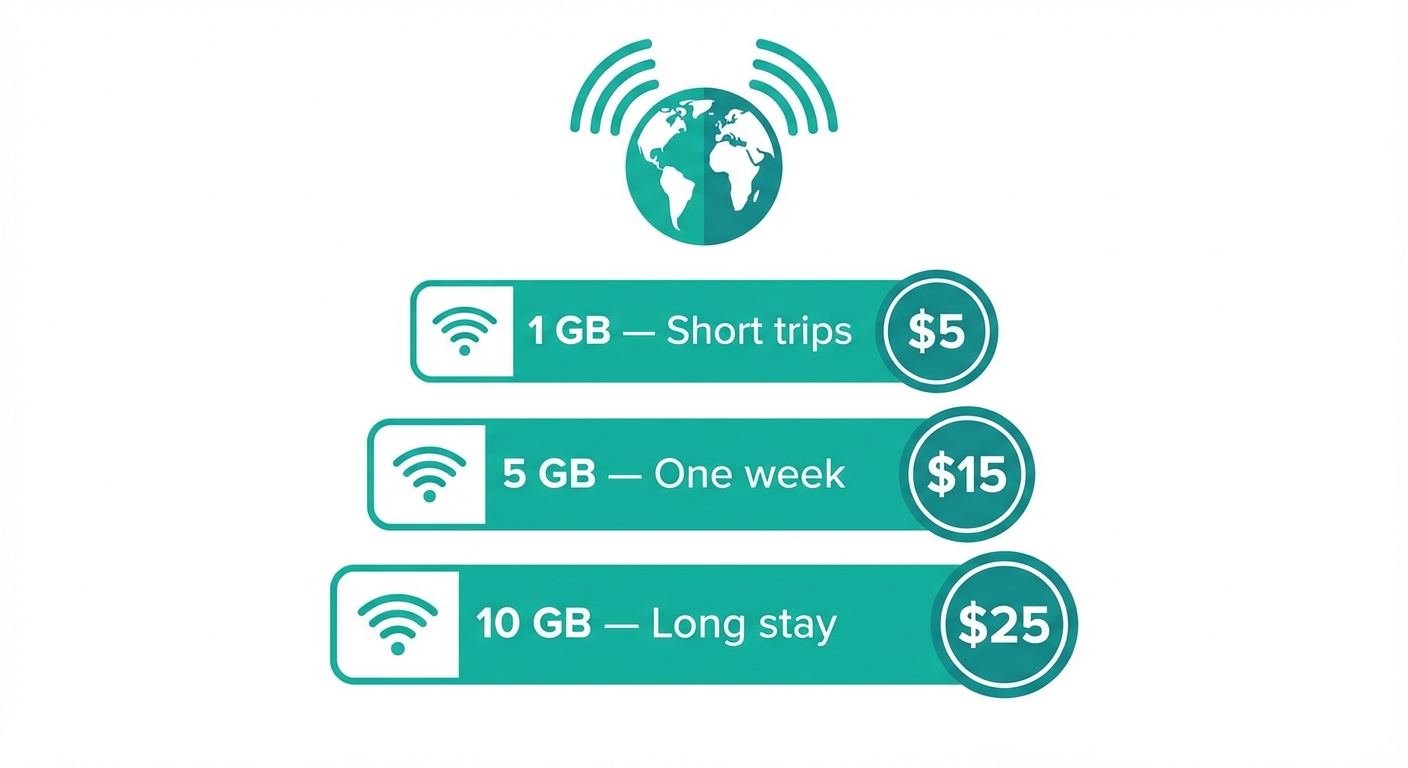
How much data should I get?
Check plan validity — avoid surprises
A 7-day plan that lapses before your trip ends is money wasted. Validity usually begins from the first time you use data, not from the date of purchase — but this varies by provider. Always read the terms before buying. For a full cost comparison of eSIM vs physical SIM, see our eSIM vs physical SIM guide.
For most plans, the validity period begins only after the eSIM first connects to a network.
You can buy in advance, but only install or activate when you're ready to use it.
Running low? Many providers let you buy more data without swapping your eSIM.