






🇯🇵 Travel eSIM plans for Japan

From just S$4.66/day*
  • Data without limits
  • 7 days of validity
  • Fast and reliable connectivity
  • Stop paying roaming fees
  • QR code sent to your email
Get started with unlimited data
Length of trip
Longer trips, better value!
7
How many eSIMs
Buy more eSIMs, save more
1
Load your eSIM before you go or while you're away. Your plan starts when you land at your destination and switch on your eSIM.

* Lowest per-day price is based on the longest unlimited data plan available.

Paying securely
Visa Mastercard PayPal Amex Diners JCB
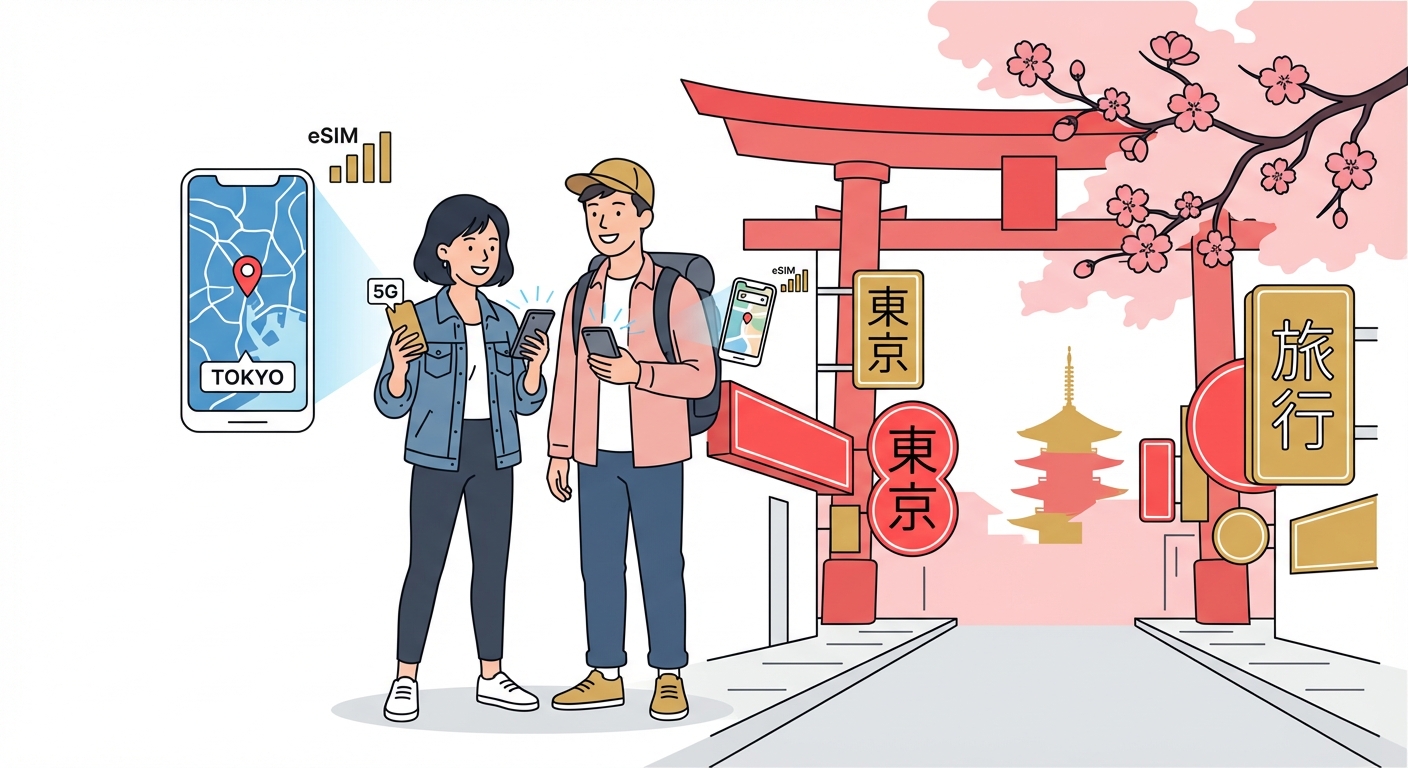
Japan eSIM travel illustration

Why go with us?

Learn how TPG Mobile compared to other choices in Japan.

TPG Mobile
Local SIM card
Roaming
Unlimited data options
Works right away
Keep your current number
No surprise charges
No lock-in
24/7 support
Asia eSIM

Explore the Region with Asia eSIM

Cover Japan and all nearby destinations on a single regional eSIM — no swapping SIMs, no hidden charges. Starting from S$2.76.

View Asia Plans
🇯🇵

eSIM pricing for Japan

All pricing in SGD

7 days of unlimited data in Japan costs S$33.59 — about S$4.80 a day on NTT Docomo, KDDI (au) or SoftBank, with no roaming charge and no SIM to swap. In Japan, 5G is live and median mobile download speed is 55.2 Mbps.

Duration Price Daily rate
1 day S$6.99 S$6.99/day
3 days S$15.41 S$5.14/day
5 days S$24.50 S$4.90/day
7 days S$33.59 S$4.80/day
10 days S$47.21 S$4.72/day
15 days S$69.86 S$4.66/day
30 days S$5.25 S$0.17/day
180 days S$71.68 S$0.40/day
🇯🇵

Which Japan eSIM plan fits your trip?

Choose a Japan eSIM by matching the allowance to your trip length and expected use, then check the existing network table for phone compatibility. The page keeps its country-specific operator, band and median-speed information, while the sections below help you compare plan sizes and use official coverage information for the places on your itinerary.

Start with the length of your stay, then allow for navigation, messaging, streaming and work use. A fixed-volume plan gives you one data pool across its stated validity period.

Short trip

1 GB / 7 days

Best for: A short city visit where mobile data is mainly for maps, messages and occasional browsing.

This is the smallest fixed-volume profile for a stay of up to seven days.

Usage tip: Use Wi-Fi for video, photo backups and app updates to keep more data available while exploring.

Two-week trip

3 GB / 15 days

Best for: Trips of up to two weeks with regular navigation, messaging and light social-media use.

The 3 GB allowance remains available across the stated fifteen-day validity period.

Usage tip: Download maps before rail journeys and use mobile data for live directions and updates.

Longer or higher use

10 GB or more / 30 days

Best for: Longer stays or travellers planning regular streaming, video calls or work-app use.

A larger thirty-day data pool gives heavier activities more room than the short-trip profiles.

Usage tip: Compare your normal phone usage with the available allowances and monitor usage during the trip.

🇯🇵

Which networks you connect to in Japan

Your eSIM roams onto Japan's own operators. These are the networks and the frequencies they run — check your phone supports them before you travel.

Operator 4G / LTE bands 5G bands 5G
NTT Docomo B1, B3, B19, B21, B28, B42 n28, n77, n78, n79, n257 Yes
KDDI (au) B1, B3, B11, B18, B26, B28, B41, B42 n28, n77, n78, n257 Yes
SoftBank B1, B3, B8, B11, B28, B41, B42 n28, n77, n78, n257 Yes
Rakuten Mobile B3, B28 n77, n257 Yes
55.2 Mbps
Median download
10.3 Mbps
Median upload

Source: Ookla Speedtest Global Index, July 2025

Coverage in Japan

Subway and underground rail tunnels in Tokyo and Osaka have near-universal LTE/5G coverage, but mountainous rural areas in central Honshu and Hokkaido have significant coverage gaps. Band 11 (1500 MHz) and Band 18/26 (800/850 MHz) are Japan-specific LTE bands often absent from foreign phones, limiting rural and indoor coverage for roaming devices.

Where to check mobile coverage in Japan

Official operator coverage information can be used to check 5G and LTE service by location. NTT Docomo's map includes prefecture-level lookup plus separate information for mountain trails and subways; use the map that matches the selected product's network details.

Cities, stations and accommodation

Check the neighbourhood around each hotel and the stations you expect to use. Official operator information can also identify service areas at stations, airports and other locations.

Mountain trails and regional routes

Use the separate mountain and route information where available, and check the destination as well as the journey. Compare your phone with the lower-frequency bands in the existing network table.

Hokkaido, Okinawa and onward travel

Check island and regional itineraries location by location. For travel beyond Japan, compare a matching country plan with a regional option and confirm every included country before departure.

Phone compatibility in Japan

Compare your phone with the 4G and 5G bands in the existing Japan network table. The published network notes highlight B11 and B18 or B26 as bands that can matter for some Japanese networks, alongside the other frequencies listed on the page.

Set up the Japan eSIM for your trip

Keep the QR code and installation instructions available offline, and complete each step according to the selected product's instructions.

When validity starts: Validity-start rules can differ by product. Check the selected plan details before installation and travel.

  1. Confirm that your phone is unlocked and supports eSIM before purchase.
  2. Save the QR code or manual installation details somewhere you can reach without mobile data.
  3. Use reliable Wi-Fi to install the profile at the time recommended in the product instructions.
  4. When you are ready to use it, select the travel eSIM for cellular data and apply the stated roaming and APN settings.
  5. Keep roaming disabled on your home line if you want to avoid using its travel data.
Network and coverage sources, checked 2026-10-10
Japan travel guide

How to Enjoy Japan with Ease

From the neon-lit energy of Tokyo's Shinjuku to the serene bamboo paths of Kyoto's Arashiyama, Japan rewards slow, thoughtful exploration. Whether you are navigating a major city or a rural onsen town, a few tools make everything smoother.

With Google Maps and a local SIM or pocket Wi-Fi, you can find train timetables and walking routes instantly. Japan's public transport is punctual and extensive, but cash remains king at smaller shops, temples, and restaurants. Carry a reasonable amount of yen at all times.

For connectivity, a reliable SIM card or eSIM from a provider such as TPG Mobile ensures you stay online without hunting for Wi-Fi. Download offline maps as a backup. Learning basic phrases like sumimasen (excuse me) and arigatou gozaimasu (thank you) opens doors, and bowing slightly when greeting is always appreciated.

Top Attractions to Prioritise

Japan's mix of ancient World Heritage sites and hyper-modern districts can feel overwhelming. These five attractions offer a balanced introduction:

  • Senso-ji Temple, Tokyo - Tokyo's oldest temple, in the Asakusa district. Visit early morning to avoid crowds and see the well-known Kaminarimon gate without the crush.
  • Fushimi Inari Shrine, Kyoto - Thousands of vermilion torii gates winding up a forested hillside. Walk at dawn for a quieter, more atmospheric experience.
  • Arashiyama Bamboo Grove, Kyoto - A short, immersive path through towering bamboo. Go at sunrise or just after opening to dodge the midday queues.
  • Hiroshima Peace Memorial Park - A sobering, essential stop. The museum and A-Bomb Dome provide deep context on the city's history and resilience.
  • Mount Fuji & Fuji Five Lakes - Best viewed on clear days from spring to autumn. The Chureito Pagoda offers a classic postcard view.

These sites are well connected by rail. Book tickets for popular spots in advance during peak seasons.

Essential Japanese Foods to Try

Japanese cuisine is extraordinarily diverse, from street-stall snacks to multi-course kaiseki. Every region has its own speciality, but these six dishes form a solid introduction:

  • Ramen - Rich broth, chewy noodles, and toppings vary by region. Try Hakata-style (pork tonkotsu) in Fukuoka, miso ramen in Sapporo, or shoyu (soy sauce) ramen in Tokyo.
  • Sushi & Sashimi - From conveyor-belt kaiten to high-end omakase, freshness is key. For a budget-friendly option, head to a local sushi chain at lunch.
  • Takoyaki - Octopus-filled batter balls, crisp outside and molten inside. Best eaten fresh from a street vendor in Osaka's Dotonbori.
  • Tempura - Lightly battered and deep-fried seafood and vegetables. A dedicated tempura-ya will serve each piece immediately for optimal crunch.
  • Yakiniku (BBQ) - Grill your own marinated meats at the table. Popular cuts include tongue, ribeye, and offal.
  • Matcha everything - From ceremonial tea to lattes, ice cream, and cakes. Kyoto's Uji region is the historic centre of matcha production.

Eating out is safe and easy. Tipping is not customary and can cause confusion.

Best Time to Visit Japan

Spring (March to May) and autumn (October to November) are the most popular seasons for good reason. Spring brings Japan's famous cherry blossoms, with peak bloom typically in late March to early April. Key viewing spots include Kyoto's Maruyama Park and Tokyo's Ueno Park. Crowds are heavy, so book accommodation and train tickets months ahead.

Autumn offers cooler temperatures and spectacular red-and-gold foliage. October through November is prime leaf-peeping time, especially in Nikko, Kyoto's Eikan-do, and Hokkaido's Daisetsuzan. The weather is generally mild and pleasant.

Summer (June to August) can be hot and humid, with June's rainy season often dampening outdoor plans. However, this is also the season for lively festivals, fireworks displays, and climbing Mount Fuji (July to early September).

Winter (December to February) is cold but excellent for onsen hopping, skiing in Hokkaido or Nagano, and seeing fewer tourists at major sights.

What to Pack for Japan

Get these five items right, and your trip will be far more comfortable:

  • IC card or cash - A rechargeable Suica or Pasmo card covers trains, buses, and convenience store purchases. Many smaller shops and eateries only take cash, so carry a mix.
  • Comfortable walking shoes - You will walk several kilometres a day on city streets, temple grounds, and uneven paths. Choose broken-in, supportive footwear.
  • Portable umbrella - Sudden rain showers happen year-round. A compact foldable umbrella is essential, especially during the June rainy season.
  • Pocket tissues & hand sanitiser - Public restrooms often lack soap and paper towels. Carry a small pack of tissues and sanitiser at all times.
  • Layers for variable weather - Spring and autumn days can swing from cool mornings to warm afternoons. A light jacket or fleece and a scarf work well.

A travel eSIM means you can activate data coverage on arrival without queuing at airport counters. A power bank is also useful, as charging points in cafes are rare.

Common questions about travel eSIMs

Answers to the questions travellers most often ask about using an eSIM overseas, from choosing a data plan to setting up before departure. Japan eSIM

The facts do not specify coverage in the Seikan Tunnel. In Tokyo and Osaka, subway and underground rail tunnels have near-universal LTE/5G coverage. For this specific tunnel, you should expect possible signal loss, especially if your phone lacks Japan-specific bands like Band 11 or Band 18/26.

This FAQ section is for Japan only. The facts provided do not mention coverage in any other country, including South Korea. You would need to check the separate product page for multi-country or regional eSIMs to confirm whether Japan and South Korea are bundled.

The facts list four operators: NTT Docomo, KDDI (au), SoftBank, and Rakuten Mobile. The specific network your eSIM uses depends on your eSIM provider’s roaming agreements. This page does not state a single default network.

Yes. Band 11 and Band 18/26 are Japan-specific LTE bands often absent from foreign phones. The facts indicate their absence limits rural and indoor coverage. In mountainous rural areas of central Honshu and Hokkaido, where significant coverage gaps already exist, you may experience weaker signal.

The facts provided do not mention any ID registration rules for eSIMs. Japanese law previously required ID for physical SIMs but regulations for eSIMs may differ. For your specific eSIM product, you should check the provider’s purchase flow for any identification steps.

Use 1 GB for a short light-use trip, 3 GB for a longer stay with regular maps and messaging, or compare plans of 10 GB and above for streaming, video calls or work use.

Use the official map for the network in the selected product details. NTT Docomo's coverage information includes location lookup plus separate information for mountain trails and subways.

The start rule is product-specific. Review the selected plan details before installing it so you know whether any action is required before arrival.
24/7 Support

Need assistance? We're here to help.

Have questions before or during your trip? Our support team is available via live chat and email, typically responding in under 2 minutes.

Talk to us
TPG Mobile customer support

