






🇨🇦 eSIM for Canada

As low as S$8.33/day*
  • Unlimited data
  • 7-day validity
  • Fast, dependable connection
  • Forget expensive roaming
  • QR code sent instantly by email
Get started with unlimited data
Validity period
Longer validity, better price!
7
Number of eSIMs
More eSIMs, more discounts
1
Set up your eSIM before you leave or while you're away. Your plan starts only when you arrive and switch it on.

* As low as price shows the cheapest per-day rate, based on the longest available unlimited data plan duration.

Secure Payment
Visa Mastercard PayPal Amex Diners JCB
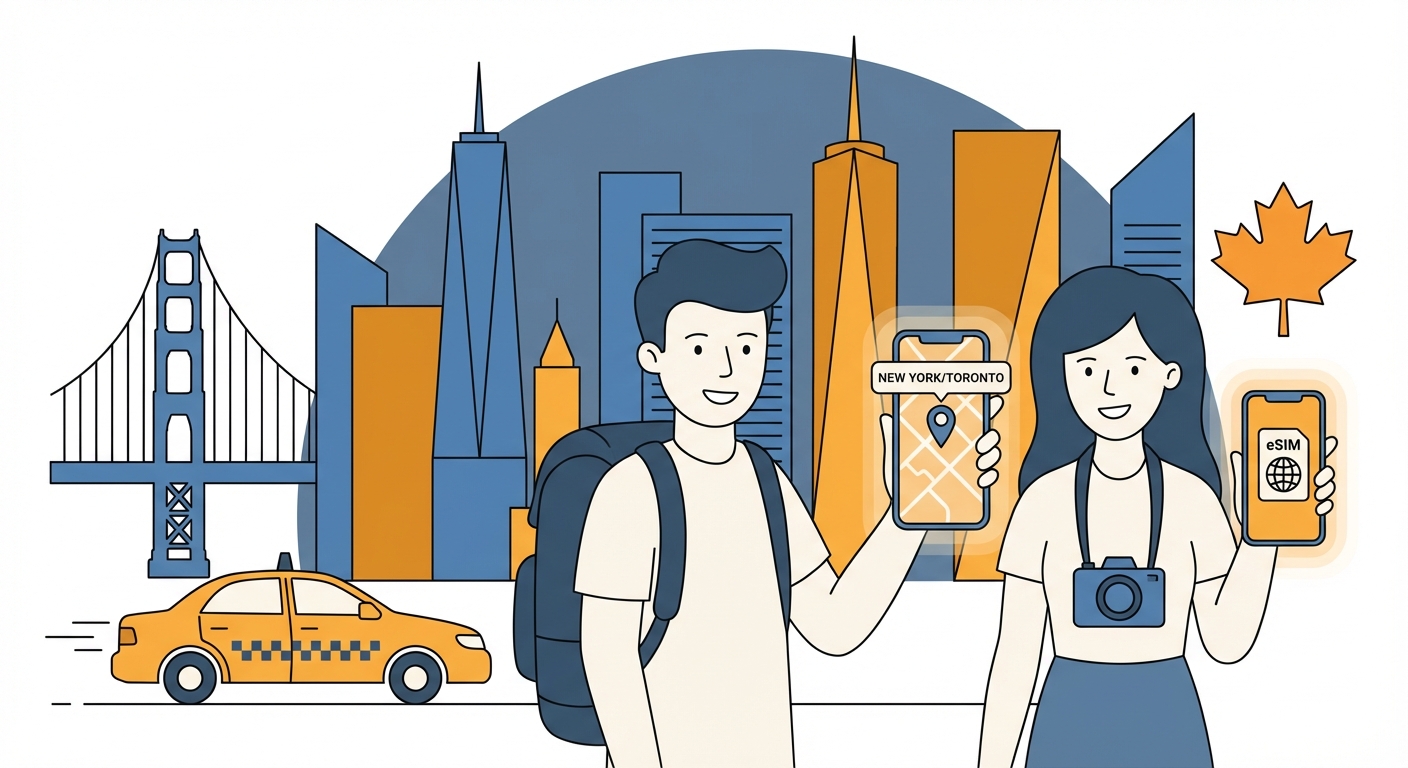
Canada eSIM travel illustration

Why choose us?

See how TPG Mobile compares with other options in Canada.

TPG Mobile
Local SIM
Roaming
Unlimited data plans
Instant activation
Keep your existing number
No hidden fees
No contract
24/7 support
North America eSIM

Travel the Region with North America eSIM

Cover Canada and every nearby country on one regional eSIM — no swapping SIMs, no surprise charges. Plans from S$1.99.

View North America Plans
🇨🇦

eSIM rates for Canada

All pricing in SGD

7 days of unlimited data in Canada costs S$60.21 — about S$8.60 a day on Bell Mobility, Rogers Wireless or Telus Mobility, with no roaming charge and no SIM to swap. In Canada, 5G is live and median mobile download speed is 97.5 Mbps.

Duration Price Per day
1 day S$10.06 S$10.06/day
3 days S$26.47 S$8.82/day
5 days S$44.62 S$8.92/day
7 days S$60.21 S$8.60/day
10 days S$83.33 S$8.33/day
15 days S$129.02 S$8.60/day
30 days S$252.29 S$8.41/day
🇨🇦

Which Canada eSIM plan fits your trip?

Choose your Canada eSIM by matching the allowance and validity period to your trip, then compare the selected product details with the local network, band and speed references already shown on this page.

Start with the length of your stay, then allow for navigation, messaging, streaming and work use. Each option below is a plan size that is currently available for this destination.

Short trip

1 GB / 7 days

Best for: A short visit with maps, messages and occasional browsing.

This option pairs the 1 GB allowance with a stated validity period of 7 days.

Usage tip: Save maps before longer journeys and use Wi-Fi for large downloads.
Two-week trip

3 GB / 15 days

Best for: A stay of around two weeks with regular navigation and messaging.

The 3 GB allowance remains available across a stated validity period of 15 days.

Usage tip: Keep automatic app updates and cloud backups on Wi-Fi.

Longer or higher use

10 GB or more / 30 days

Best for: A longer stay or more frequent streaming, video calls or work use.

The 10 GB or more / 30 days profile provides a larger data pool than the short-trip options on this page.

Usage tip: Compare the allowance with your normal phone usage and monitor it during the trip.

🇨🇦

Which networks you connect to in Canada

Your eSIM roams onto Canada's own operators. These are the networks and the frequencies they run — check your phone supports them before you travel.

Operator 4G / LTE bands 5G bands 5G
Bell Mobility B2, B4, B5, B7, B12, B13, B17, B29, B66 n66, n78 Yes
Rogers Wireless B2, B4, B5, B7, B12, B13, B17, B29, B66 n66, n78 Yes
Telus Mobility B2, B4, B5, B7, B12, B13, B17, B29, B66 n66, n78 Yes
Freedom Mobile B4, B7, B13, B66 n71, n78 Yes
Videotron B4, B7, B12, B13, B17, B66 n66, n71 Yes
SaskTel B2, B4, B5, B7, B12, B13, B17, B66 n66, n78 Yes
97.5 Mbps
Median download
11.7 Mbps
Median upload

Source: Ookla Speedtest Global Index, July 2026

Coverage in Canada

Vast areas of the northern territories (Yukon, Northwest Territories, Nunavut) and remote highway corridors have no cellular service. Bell and Telus share a nationwide RAN, so a roaming eSIM typically sees only one of them. Band 71 (600 MHz) used by Freedom Mobile for extended-range LTE and 5G is absent from many international phones.

How to check mobile coverage in Canada

The Canada mobile network source is linked below as a public network reference. Check the places on your itinerary where the source offers local detail, then confirm the network information for the selected eSIM product. The operator table on this page provides the country-level reference, while the selected product details identify which network information applies to your plan.

Accommodation and daily stops

Check your accommodation and the places you expect to visit in Canada. Indoor reception can differ from an outdoor map, so keep the property Wi-Fi details available as well.

Journeys between stops

Review the full route rather than checking only the arrival city. Save tickets, addresses and maps offline before longer road or rail journeys.

Borders and onward travel

Check the selected product scope for every country on your itinerary. Your Canada plan and a regional plan may have different included destinations and validity periods.

Phone compatibility in Canada

Compare your phone with 4G bands B2, B4, B5, B7, B12, B13, B17, B29, B66 and 5G bands n66, n71, n78 in the existing Canada network table. Support for more of the listed bands gives the phone more options when connecting, while the selected product, location and local network conditions determine the service available.

Set up the Canada eSIM for your trip

Keep the QR code and installation instructions available offline, and complete each step according to the selected product's instructions.

When validity starts: Validity-start rules can differ by product. Check the selected plan details before installation and travel.

  1. Confirm that your phone is unlocked and supports eSIM before purchase.
  2. Save the QR code or manual installation details somewhere you can reach without mobile data.
  3. Use reliable Wi-Fi to install the profile at the time recommended in the product instructions.
  4. When you are ready to use it, select the travel eSIM for cellular data and apply the stated roaming and APN settings.
  5. Keep roaming disabled on your home line if you want to avoid using its travel data.
Network and coverage sources, checked 2026-10-10
Canada travel guide

How to Enjoy Canada Like a Local

Canada rewards travellers who slow down and engage with its regions on their own terms. In Banff National Park, arrive at popular trailheads before 7am to find parking and avoid crowds. The Rocky Mountain towns of British Columbia, Quebec and Ontario each have distinct personalities; do not try to see all of them in one trip. In the Yukon, summer brings near-endless daylight, so pack a sleep mask and plan evening hikes. But Canada's cities also deserve proper time. Toronto's neighbourhoods, Montreal's street art and Vancouver's seawall each require at least two days to appreciate properly. Quebec City's UNESCO-listed European quarter is best explored on foot after dark when the crowds thin. With Canada's size, domestic flights often make more sense than long drives. Book through regional carriers rather than the national airlines for better fares on routes served by Rogers, Bell or Telus partner airlines.

Top Attractions Worth Your Time

  • Banff & Jasper National Parks, Alberta - The Canadian Rockies offer Lake Louise, Moraine Lake and the Icefields Parkway. Stay a minimum of three nights to see both parks properly.
  • Niagara Falls, Ontario - The Canadian side gives the best views. Visit in shoulder season (May or September) to avoid peak crowds.
  • Old Quebec City, Quebec - A fortified city with cobbled streets and French-colonial architecture. Stay inside the walls for the full experience.
  • Northern Lights (Aurora Borealis) - Best seen in Yukon, Northwest Territories or northern Manitoba between November and March. Book a guided tour for safety.
  • Tofino, Vancouver Island - A surf town with old-growth rainforest and storm-watching in winter. Summer requires accommodation booked months ahead.

These five attractions represent Canada's diversity. Banff and Jasper National Parks in Alberta showcase the Canadian Rockies with Lake Louise and Moraine Lake. The Icefields Parkway and Athabasca Glacier offer accessible ice walking. Among the attractions, the Northern Lights demand patience and clear skies, so allow several nights.

Must-Try Canadian Foods

  • Poutine - Quebec's signature dish of fries, cheese curds and gravy. Seek small diners in Montreal or Quebec City for the best versions.
  • Montreal-style Smoked Meat - Lean brisket on rye bread with mustard. Schwartz's Deli remains the benchmark.
  • Butter Tarts - A Canadian pastry with a flaky crust and gooey centre. Small bakeries in Ontario make the finest examples.
  • Atlantic Lobster & Digby Scallops - Fresh from the Maritimes. Order them simply prepared in Halifax or Saint John.
  • Nanaimo Bars - A no-bake dessert from British Columbia with a custard centre and chocolate top. Try them on Vancouver Island.
  • BeaverTails - Fried dough shaped like a beaver tail, topped with cinnamon sugar. Available at winter festivals across Canada.

Canadian cuisine blends French and British traditions with Indigenous ingredients. Seek poutine in Quebec's smaller towns rather than tourist areas. Canada's butter tarts and Nanaimo bars are sweet treats best found in local bakeries.

When to Visit Canada

Canada's size means the best time depends entirely on where you go. For the Rocky Mountains in Banff and Jasper, June through September offers the most accessible trails and services. Moraine Lake's famous blue water appears only after the ice melts in late June, so July and August are peak season. Book accommodation by January for summer visits. For eastern cities like Toronto, Montreal, Quebec City and Ottawa, May to October gives pleasant weather and major events such as the Montreal Jazz Festival and Toronto Pride. Winter (December to March) suits skiers and those wanting to see the Northern Lights, but pack proper cold-weather gear. Vancouver and the Pacific coast have milder winters but more rain; the best window there is June to September. Shoulder months (May and September) offer fewer crowds and lower prices across most regions, though some mountain services close in late September.

What to Pack for Canada

Canada requires layered packing for its variable climate. Proper winter clothing for cold regions means a thermal base layer, insulated mid-layer and a windproof outer shell. Waterproof hiking boots are essential for the Rockies and Vancouver's rainforest trails. Bear spray is mandatory for any hike in Alberta and British Columbia backcountry; buy it on arrival as airlines prohibit it. Insect repellent with DEET is necessary from May to August, especially in Ontario's cottage country and the northern territories. Layers for mountain weather mean a fleece or down jacket even in summer, as temperatures drop quickly at elevation. Proper rain gear is vital for Vancouver's frequent drizzle and Quebec's spring showers. Ontario's hot summers require light clothing and sun protection. Cold weather gear including gloves and a warm hat is needed from October to April. A travel eSIM will work across Canada, but download offline maps for areas without cell service.

Frequently Asked Questions

All you need to know about your Canada eSIM

Vast areas of the northern territories, including Yukon, Northwest Territories, and Nunavut, have no cellular service at all. Your eSIM will not connect in those remote zones. It will work in populated southern regions and along major highways, but expect dead zones north of the 60th parallel.

This FAQ is for Canada only. The facts provided do not mention coverage in the United States or any neighbouring country. You should check whether your eSIM plan includes US roaming separately; this page does not address cross-border use.

Bell and Telus share a nationwide radio access network, so your eSIM will typically register on only one of them, not both. Rogers and Freedom Mobile operate independently. The specific operator your eSIM uses depends on your provider’s roaming agreements, which are not listed here.

Freedom Mobile uses band 71 for extended-range LTE and 5G. Many international phones lack this band. If your phone does not support band 71, you may miss coverage in rural or indoor areas where Freedom relies on that frequency. Your eSIM may still work on other carriers like Bell or Rogers.

The facts provided do not mention any local registration or ID rules for eSIMs in Canada. Typically, prepaid eSIMs for travellers do not require in-person ID checks, but you should confirm with your eSIM provider whether any activation steps are needed before you arrive.

Compare 1 GB / 7 days, 3 GB / 15 days and 10 GB or more / 30 days. Use the shorter profiles for lighter maps and messaging use, then compare the larger allowance for streaming, video calls or work apps.

The start rule is product-specific. Review the selected plan details before installing it so you know whether any action is required before arrival.

Save the QR code, manual installation details, APN guidance and the support instructions supplied with the selected plan.
24/7 Support

Need help? We're here for you.

Have a question before or while you are travelling? Our support team is on standby via live chat and email. Typical reply time is under 2 minutes.

Chat with us
TPG Mobile customer support

Bundle Canada with other nearby countries.


