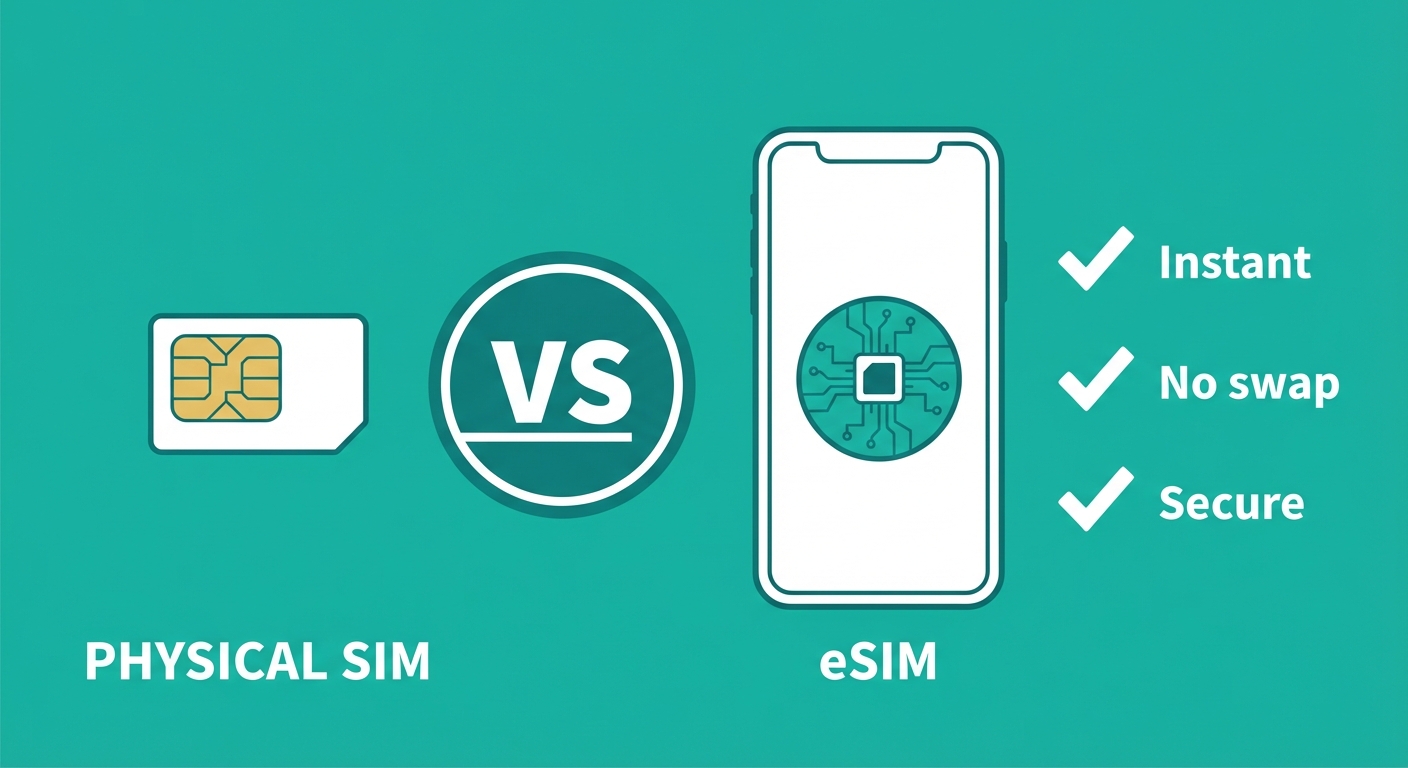
eSIM vs Physical SIM
Which is better for travel? A practical comparison of convenience, cost, availability, and compatibility to help you decide.
eSIM is the better travel option — with one condition
An eSIM is faster to set up, more convenient, and works on more and more devices. The catch: your phone must be eSIM-compatible. That includes iPhone XR and newer, plus most Android flagships from 2020 onwards. For a country-by-country list, check our eSIM coverage guide.
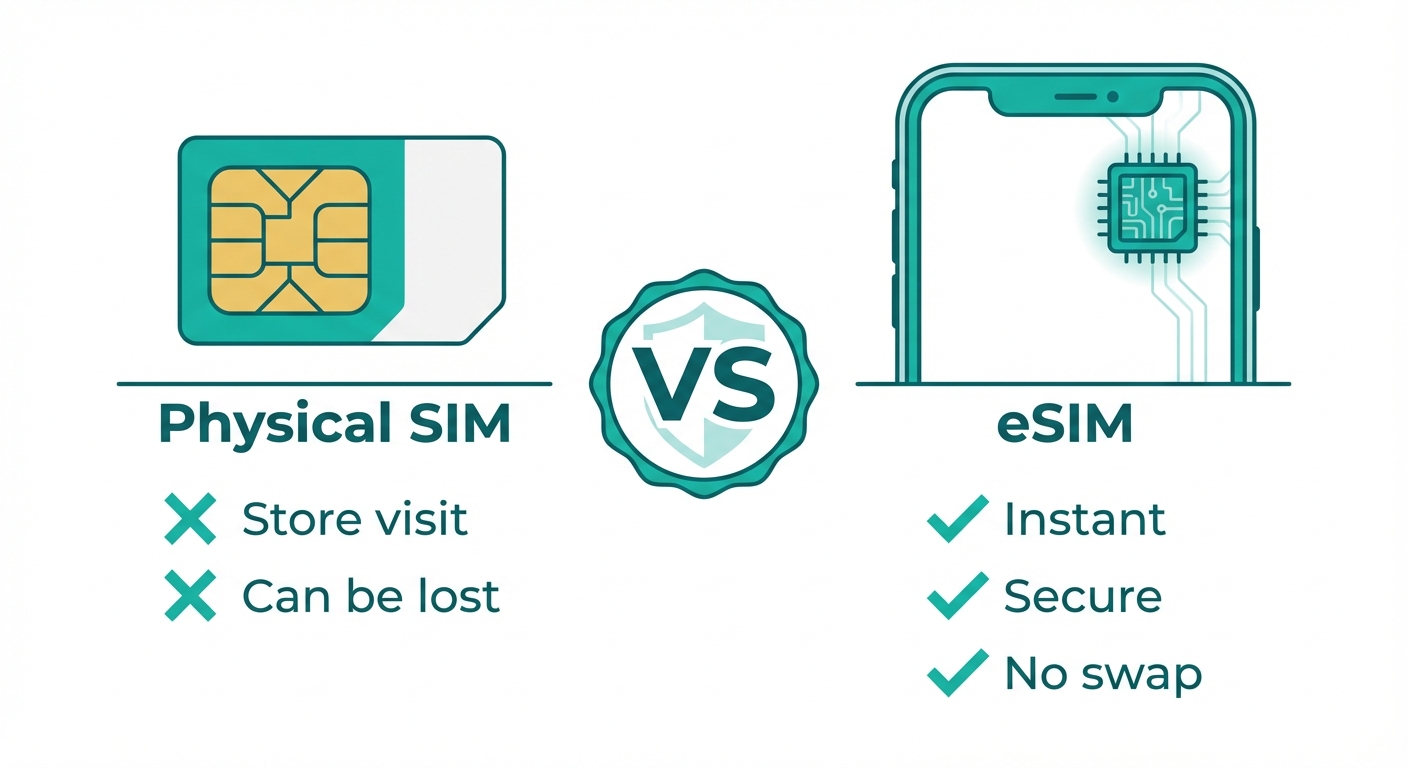
Full comparison — 10 key factors
eSIM beats a physical SIM on 8 out of 10 factors for travellers. Ready to switch? Browse the best eSIM providers or read how to run eSIM + physical SIM simultaneously.
When physical SIM still wins
eSIM isn't right for everyone. In three situations a physical SIM still makes more sense. Before you travel, check the eSIM data plans guide to compare costs and data plans.
If your phone is an iPhone 8 or earlier, or an older Android, it won't support eSIM. A physical SIM is your only option.
Some budget handsets are carrier-locked and won't accept third-party eSIMs until unlocked. Confirm with your carrier first.
A handful of countries have limited eSIM networks. Cuba, parts of sub-Saharan Africa, and a few other markets still depend mostly on physical SIMs.
Travelling somewhere with weak eSIM support? Check our eSIM coverage guide before you book.