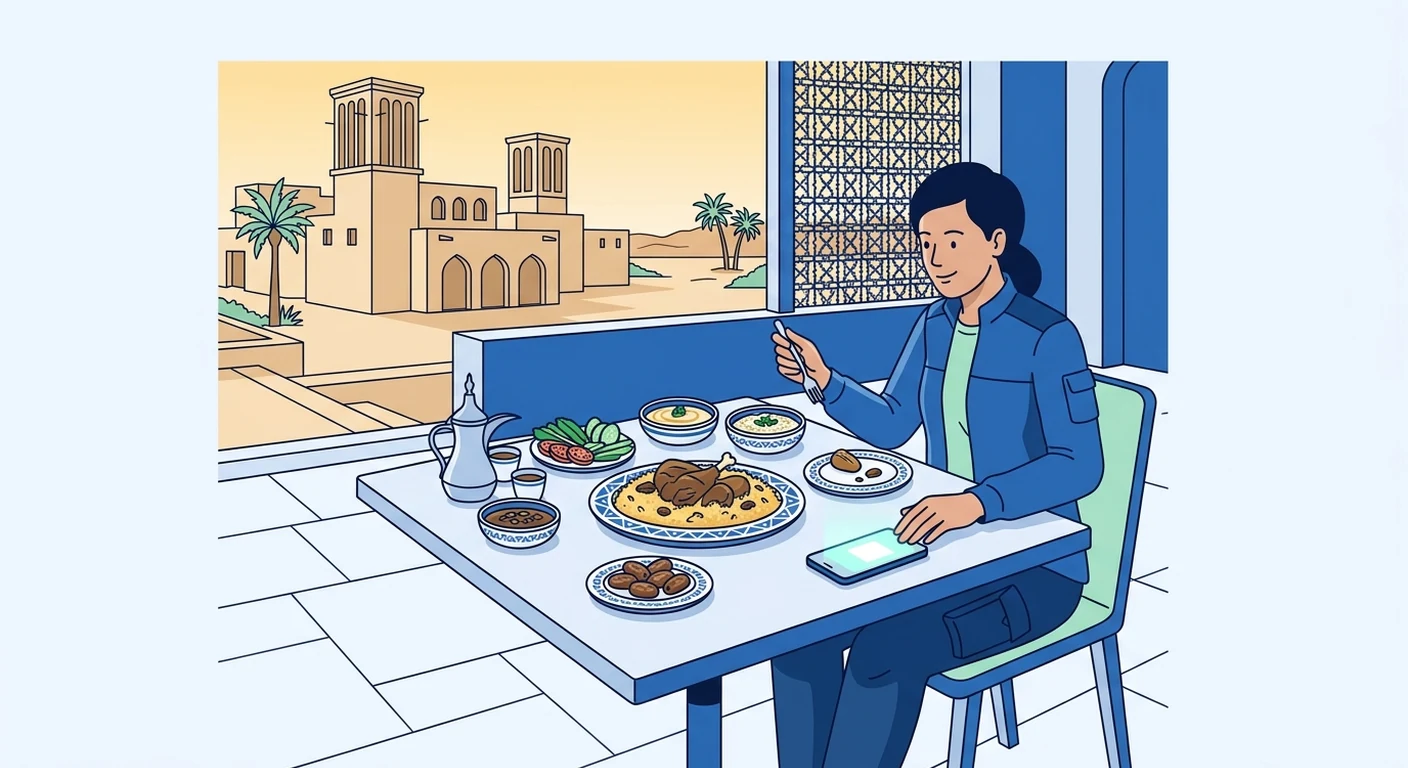
When you travel to the United Arab Emirates, you will find a food scene that blends Bedouin traditions, coastal ingredients, and global influences. This guide helps you understand the representative dishes you are likely to encounter, where different meal experiences fit, and how to navigate dining customs, dietary communication, ordering, and food-safety judgement. You do not need a full list of every restaurant; instead, you will learn what to look for, how to order with confidence, and how to enjoy meals without guesswork.
Iconic Local Dishes You Must Try
These are the dishes that appear on most local menus and in home kitchens. They are not just tourist items; they are everyday foods with deep cultural roots. Al Harees is a slow-cooked porridge of wheat and meat, often served during Ramadan and at celebrations. Majboos is a spiced rice dish with meat or fish, similar to biryani but with a distinct Emirati blend of spices. Luqaimat are sweet dumplings drizzled with date syrup, usually eaten as a dessert or with coffee. Camel meat appears in stews, grills, and even burgers; it is lean and slightly gamey. Thareed is a layered dish of bread, meat, and vegetables in a rich broth, often associated with winter meals. You will find these dishes in traditional restaurants, hotel buffets, and sometimes in food courts. If you are unsure, start with majboos or thareed, as they are the most approachable for first-time visitors.
Street Food and Casual Dining Gems
For a quick meal or a casual snack, the UAE has a lively street food culture that is easy to navigate. Al Reef Bakery is a well-known chain for fresh khubz, the round flatbread that accompanies most meals. You can buy it warm and eat it with hummus, fattoush salads, or falafel sandwiches. Al Mallah is another popular spot, especially for shawarma and juices, and it has branches in several cities. If you are near Ibn Battuta Mall in Dubai, its food court offers a mix of local and international options, which is useful if you are travelling with a group with different tastes. The Al Mina Fish Market area in Dubai is where you can see the day's catch and choose fish to be grilled or fried on the spot. For casual dining, falafel sandwiches and hummus are safe, filling choices that are widely available and usually vegetarian. These spots are busy during lunch and dinner, so expect a queue, but the turnover is fast.
Fine Dining and Regional Specialties
If you want a more polished meal, the UAE has several fine dining venues that showcase regional ingredients and techniques. Al Mahara, located in a well-known hotel in Dubai, is famous for its seafood and its aquarium setting; it is a good choice for a special occasion. Arabian Court at One&Only Royal Mirage offers a more traditional setting with live music and a menu of Middle Eastern and North African dishes. These venues often require reservations, and dress codes are smart-casual or formal. Regional specialties at this level might include lamb dishes, seafood platters, and desserts like umm ali, a bread pudding with nuts and raisins. Fine dining is not just about the food; it is about the atmosphere and service. If you are celebrating a milestone or want a memorable evening, these restaurants deliver, but they are also the most expensive part of your food budget. You can also find high-end versions of local dishes, so do not assume that fine dining means only international cuisine.
Dining Customs and Practical Etiquette
Understanding local customs helps you avoid awkward moments and shows respect. In the UAE, meals are often shared, especially in traditional settings. If you are invited to someone's home, it is polite to accept what is offered and to eat with your right hand, as the left hand is considered unclean in many Middle Eastern cultures. Before eating, you may hear the phrase ‘Bismillah’, which means ‘in the name of God’; it is not required, but it is respectful to wait until your host begins. During Ramadan, eating, drinking, and smoking in public during daylight hours is not allowed, even if you are not fasting. Many restaurants are closed during the day and open after sunset. When dining out, tipping is customary but not mandatory; around 10% is appreciated if service is not already included. Dress codes in restaurants vary, but for casual dining, modest clothing is fine. In fine dining, men often wear a collared shirt and trousers, and women may wear a dress or smart separates. Alcohol is served only in licensed venues, usually hotels, and you must be 21 or older. If you are unsure about a venue's policy, ask before ordering.
Dietary Communication, Ordering and Food-Safety Judgement
Communicating dietary needs is straightforward if you know a few phrases. ‘Ana nabati’ means ‘I am vegetarian’, and ‘halal’ is standard for meat, as most meat in the UAE is halal. If you have allergies, say ‘indee hasasiyah’ (I have an allergy) and be specific, such as ‘la mawz’ for no banana or ‘la fūl’ for no beans. When ordering, ask if a dish contains nuts, dairy, or gluten if you are sensitive. In casual restaurants, you can often see the ingredients, but in buffets, ask the server about dishes you do not recognise. For food safety, the UAE has high hygiene standards, but use judgement. Eat at places that are busy, as high turnover usually means fresher food. Street food is generally safe, but choose stalls where the food is cooked to order and kept hot. Avoid raw salads or unpeeled fruits if you have a sensitive stomach, and drink bottled water unless you are certain the tap water is safe. Seafood from markets like Al Mina is fresh, but ensure it is cooked thoroughly. If you have a severe allergy, carry a card that explains your allergy in Arabic, and always inform the server before ordering. When in doubt, ask for dishes without raw vegetables or sauces, and choose freshly cooked items over those sitting under a heat lamp.