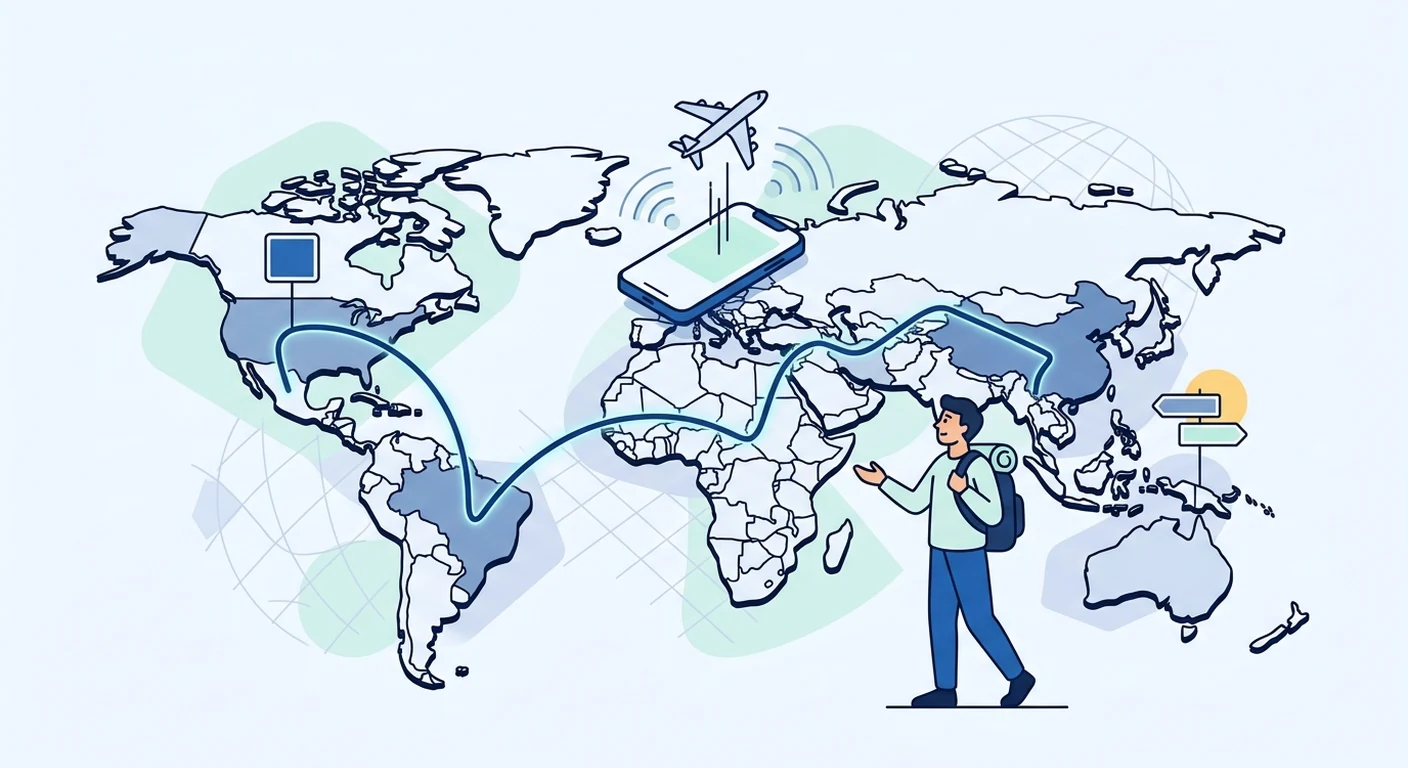
If you are travelling through several countries on one trip, a single eSIM can remove the hassle of buying a new SIM at every stop. TPG Mobile offers regional and global travel eSIMs that let you stay connected across multiple destinations with one activation. This page explains what to check before you buy, how coverage works when you cross borders, and the trade-offs between regional and global plans.
What regional and global travel eSIMs cover
Regional eSIMs are designed for a group of countries, such as Asia, Europe, or the Middle East. A global plan usually covers a wider list of destinations, sometimes spanning several continents. Both types let you use mobile data in more than one country with a single eSIM, which is convenient if your itinerary includes a stopover or a multi-country tour.
However, coverage lists are not uniform. A plan that works in one part of a region may not work in another, and a global plan may exclude certain territories. Always check the latest coverage list on the TPG Mobile website before purchasing, because the included countries can change.
Why coverage lists are not the same as network maps
When you see a list of countries, it tells you where the eSIM should connect. It does not tell you which local network you will use, nor does it guarantee signal strength in every area. Remote regions, underground stations, or rural zones may have poor coverage even in a listed country. For reliable connectivity in cities and tourist areas, check the plan description for network partners or any notes about data speeds.
How border crossings affect your eSIM
When you move from one country to another, your eSIM should automatically switch to a local network in the new destination, provided that country is included in your plan. This works differently from a Singapore mobile number, because a travel eSIM does not use a local Singapore network. You will not need to reinstall the eSIM or buy a new one at the border.
That said, the switch may not be instant. Your phone may take a few minutes to register on the new network, especially if you are travelling by train or bus through remote areas. If you do not have data for a short period, that is normal. You can often speed up the process by turning mobile data off and on again, or by manually selecting a network in your phone settings.
What happens if you enter a country not in your plan
If you enter a destination that is not included in your regional or global plan, the eSIM will not provide data there. You will need to either buy a separate local eSIM for that country or use Wi-Fi. To avoid an unexpected loss of connectivity, list every country on your itinerary and compare it with the plan's coverage before you leave Singapore.
Choosing between regional and global plans
The main trade-off is between the breadth of coverage and the amount of data you get for the price. A regional plan is often cheaper if you are staying within one area, such as Europe or Asia. A global plan may cost more but can be worth it if you are crossing between regions, for example travelling from Japan to the United States on the same trip.
Another difference is data allowance. Some plans offer a fixed amount of data for the entire validity period, while others may give a daily allowance. If you are a heavy user, such as streaming video or using navigation constantly, you may need a larger data package. If you only need messaging and maps, a smaller allowance could be enough.
How to match a plan to your travel style
For a short holiday in one region, a regional plan with a modest data allowance is often the most cost-effective choice. For business travel or a long trip across multiple continents, a global plan gives you flexibility and fewer worries about coverage gaps. If you are visiting family in several countries, consider whether the plan covers all the places you will stay, not just the airports and main cities.
You should also think about how long you will be away. Validity periods vary, and a plan that lasts 30 days may not suit a longer journey. Check the validity and the data allowance carefully, because using the eSIM beyond its validity period will stop your connection.
Setting up before you depart
To get the most from a regional or global eSIM, install it before you leave Singapore. You will need a stable internet connection to download the eSIM profile, which you can do at home or at the airport. After installation, keep your usual Singapore SIM card in the phone if you want to receive SMS or calls, but remember that roaming charges may apply if you use it overseas. The travel eSIM is separate and will provide data when you arrive.
On the day of travel, ensure that mobile data is enabled and that your phone is set to use the travel eSIM for data. Some phones allow you to choose a default line for data, so check your settings. If you have any issues, most travel eSIM providers offer setup guides or customer support, but response times can vary.
What to do if you run out of data or validity
If you exhaust your data allowance, you will not be able to browse until you top up or buy a new eSIM, depending on the plan. Some plans allow top-ups, but not all do. If your plan does not allow top-ups, you may need to purchase another eSIM for the remaining days of your trip. To avoid this, estimate your data needs before you leave, and consider buying a plan with a little extra allowance if you are unsure.
If your validity period expires, the eSIM will stop providing data. You can delete the eSIM profile from your phone or keep it for reference, but it will not work. For longer trips, you can buy a new eSIM that covers the additional days, or look for a plan with a longer validity from the start.
Making the right choice for your trip
Regional and global travel eSIMs from TPG Mobile are designed to simplify connectivity when you cross borders. The key is to verify that the plan covers every country on your itinerary, understand how the data allowance works, and set up the eSIM before you leave. With the right plan, you can arrive at your first destination and connect immediately, without hunting for a local SIM or paying high roaming charges.
