The best time to visit the Czech Republic depends on what you want from your trip: May to September offers the warmest weather and the longest daylight hours, while the winter months of December to February bring Christmas markets and a quieter, snow-dusted atmosphere. For most travellers, late spring (May and June) and early autumn (September) strike the best balance between pleasant temperatures, manageable crowds and reasonable prices. That said, the country’s varied regions - Bohemia in the west and Moravia in the east - can feel quite different in the same week, so it pays to match your travel dates to the places you plan to see.
Weather by Season and What to Expect
The Czech Republic has a temperate continental climate, which means four distinct seasons rather than extreme heat or cold. Summers are generally warm but not oppressive, with average highs in the low-to-mid 20s °C, while winters are cold, often below freezing, especially in the mountains and at night. Spring and autumn are transitional, with mild days and cooler evenings, so layering is essential. Rainfall is spread fairly evenly through the year, though summer thunderstorms are common in the afternoons, particularly in Bohemia. The Moravian region, to the east, tends to be slightly warmer in summer and a touch colder in winter, so if your itinerary includes Brno or the wine country, pack accordingly.
Seasonal Highlights and Trade-offs
Each season offers a different Czech Republic, and the trade-offs are worth weighing before you book. Winter (December to February) is the coldest period, but it is also the season of Prague’s famous Christmas markets and the quietest time for sightseeing outside the festive weeks. Spring (March to May) brings gradually warming weather, blossoming trees and fewer tourists, though early spring can still feel wintry. Summer (June to August) is the peak tourist season, with long daylight hours and a lively atmosphere in Prague’s Old Town Square, but also the largest crowds and the highest prices for accommodation. Autumn (September to November) offers mild weather, colourful foliage and a more relaxed pace, with September often being the sweet spot for travellers who want good conditions without the summer rush.
Month-by-Month Breakdown
If you are flexible with dates, a month-by-month look helps you align your priorities - whether that is avoiding crowds, chasing sunshine or saving money. January and February are the coldest months, with short daylight and occasional snow; they suit travellers who enjoy winter scenery and don’t mind bundling up. March and April mark the transition to spring, with longer days and temperatures slowly rising, though rain is possible and the landscape is still waking up. May is a particularly pleasant month - mild, green and less crowded than summer - making it a favourite for first-time visitors. June and July bring the warmest weather and the longest days, but also the busiest streets and higher prices. August remains warm and busy, though many locals take their own holidays then, so some shops and restaurants may close for a week. September is often the best overall month: comfortable temperatures, fewer crowds and the start of the autumn colours. October cools down noticeably, but the foliage is beautiful, especially in Bohemia’s countryside. November and December are cold and darker, yet December’s markets and festive lights make it a magical time for a short city break.
Peak Season vs. Off-Peak Travel
Peak season in the Czech Republic runs from June to August, when Prague’s Old Town Square and the Charles Bridge are at their most crowded, and hotel prices in the centre can rise sharply. The other peak window is December, driven by the Christmas markets, though the rest of the winter is quiet. Off-peak months - typically November, January and February - offer lower prices and fewer tourists, but you will need to plan for cold weather and limited daylight. The shoulder seasons of May, September and early October are the practical middle ground: you still get reasonable weather, but you avoid the worst of the crowds and the highest rates. If you are visiting the Moravian wine region, autumn is especially rewarding because the harvest season brings local festivals and a lively atmosphere, even if the weather is cooler.
Regional Differences: Bohemia and Moravia
Bohemia, which includes Prague and the western half of the country, is what most visitors picture: historic towns, castle ruins and rolling hills. The weather here follows the general seasonal pattern, though the capital can feel warmer in summer because of the urban heat island effect. Moravia, in the east, is more agricultural, with the Moravian wine region around Mikulov and Znojmo. It tends to have slightly warmer summers and colder winters than Bohemia, and the landscape is flatter and more pastoral. If you plan to visit both regions, note that the distance between Prague and Brno is about two hours by train, so the weather can differ noticeably between the two cities on the same day. For outdoor activities like hiking in Bohemian Switzerland or the Krkonoše mountains, late spring and early autumn are the most comfortable times, as summer can be crowded and winter trails may require snow gear.
Practical Travel Tips for Any Season
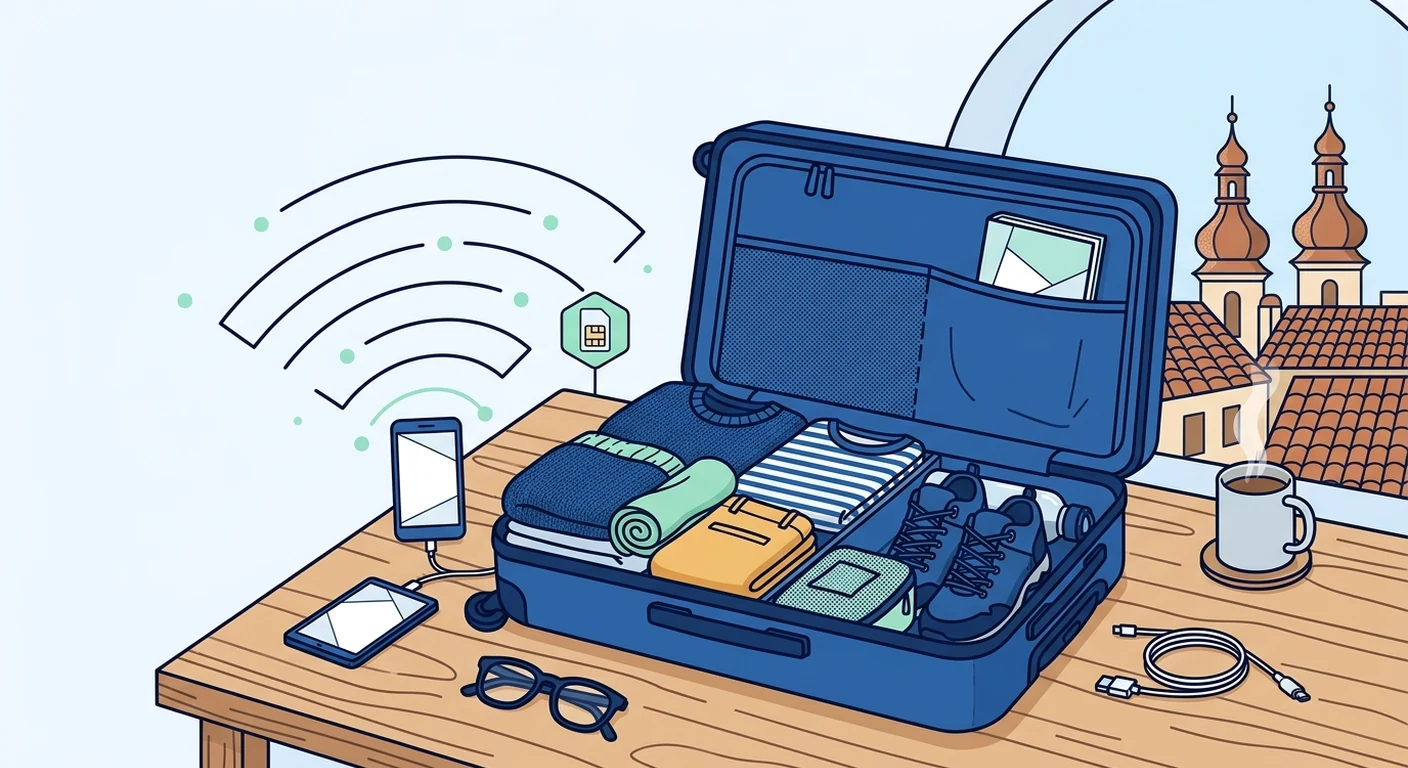
Whatever time of year you choose, a few practical tips will make your trip smoother. Pack layers, because even summer evenings can be cool, and a light rain jacket is useful from spring to autumn. In winter, sturdy shoes and a warm coat are non-negotiable, especially if you plan to walk around Prague’s cobblestone streets. Daylight hours vary significantly: in June, the sun can set after 9 pm, while in December it can set before 4 pm, so plan your sightseeing accordingly. For connectivity, a travel eSIM like TPG Mobile can be a convenient way to stay online without hunting for a local SIM after landing - just check that your mobile phone supports eSIM and that the plan covers the Czech Republic. Booking accommodation and train tickets in advance is wise for peak season, while off-peak travellers can often find last-minute deals. And always carry a light layer, even in summer, because evenings can be cool regardless of the season.