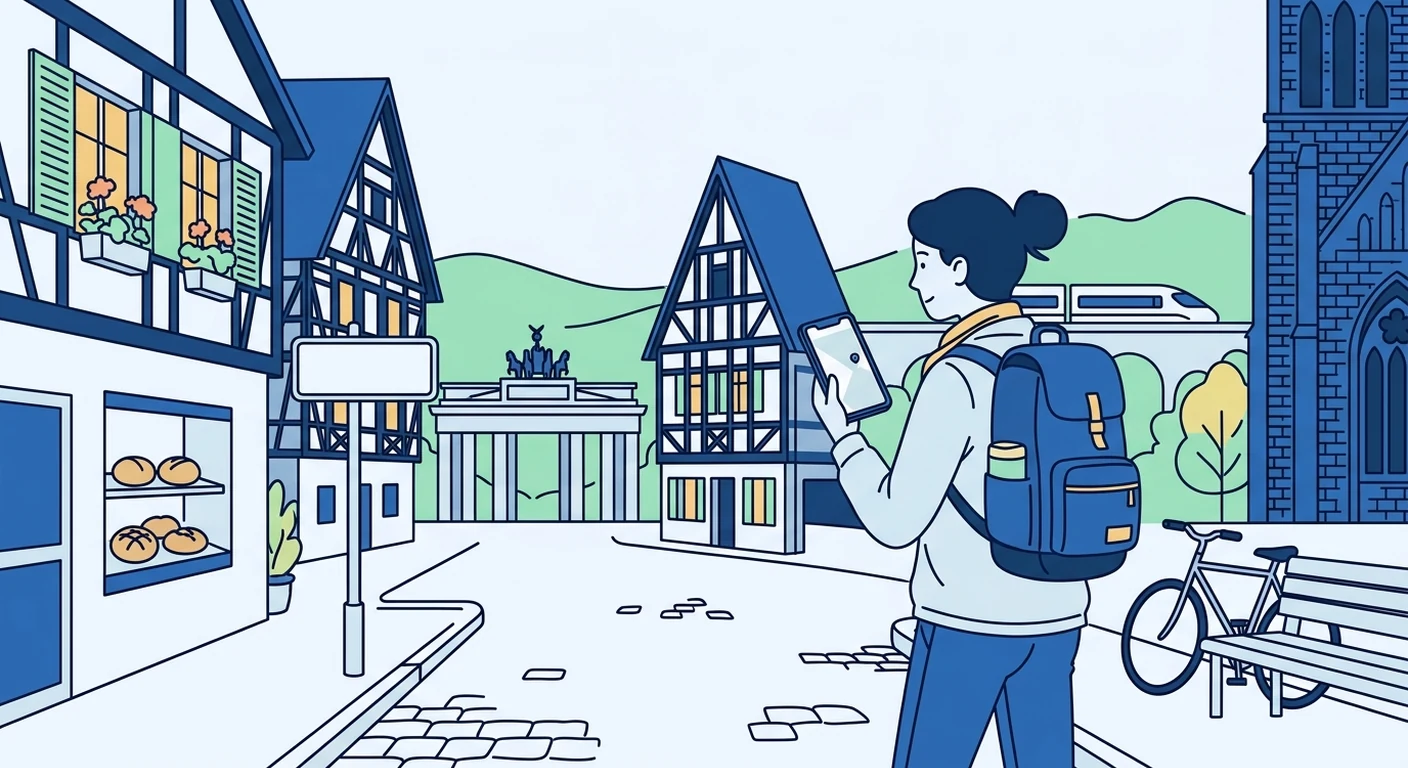
If you are travelling from Singapore to Germany, the key to a smooth sightseeing trip is grouping attractions by neighbourhood, booking timed entries in advance, and using regional trains and trams to move between districts. This guide helps you choose and sequence the main sights in Berlin, Bavaria, and beyond, so you spend less time queueing and more time exploring.
Start with Berlin: Iconic Landmarks and Historical Sites
Berlin is the natural first stop for most Singapore-based travellers because it has the busiest international airport and the densest cluster of landmarks. Begin at the Brandenburg Gate, the city’s most famous symbol, and walk east along Unter den Linden to the Reichstag building. The Reichstag’s glass dome is free to visit, but you must register online before your trip; slots open about two months ahead and fill quickly. Nearby, the Memorial to the Murdered Jews of Europe is a sobering open-air site that needs no booking, but allow at least an hour to walk through the grid of concrete stelae and visit the underground information centre. Group these three sights in one morning because they sit within a 20-minute walk of each other.
Group Museum Island and the River Spree for a Half-Day
After the landmarks, cross the Spree River to Museum Island, a UNESCO-listed complex of five museums. The Pergamon Museum and the Neues Museum are the most popular, but note that the Pergamon’s main hall is closed for renovation until at least 2027; check the current exhibition list before booking. Purchase a timed ticket online for the museum you most want to see, and consider the Berlin Welcome Card if you plan to use public transport all day, as it includes a travel pass and discounts on many museums. End the afternoon with a short river cruise along the Spree to rest your legs and see the city from a different angle, but do not expect the commentary to be in English on every boat.
Use Regional Transport to Reach Natural Wonders and Outdoor Adventures
Germany’s natural highlights are not in the city centres, so plan transport carefully. From Berlin, the Spreewald biosphere reserve is a two-hour regional train ride south; here, you can hire a traditional punt boat to glide through canals, but the season runs from April to October only. If you prefer mountains, head to Bavaria for the Zugspitze, Germany’s highest peak. From Munich, take the regional train to Garmisch-Partenkirchen, then the cogwheel railway or cable car to the summit. The journey takes about three hours each way, so dedicate a full day. For a shorter outdoor break, the Saxon Switzerland National Park near Dresden offers sandstone rock formations and hiking trails; take the S-Bahn from Dresden to Kurort Rathen and cross the river by ferry. Always check the weather forecast before setting out, as trails can close in heavy rain or snow.
Combine Major Cities and Cultural Experiences in a Logical Order
If you are visiting more than one city, sequence them geographically to avoid backtracking. A common route from Singapore is Berlin - Dresden - Munich, using the high-speed Intercity-Express (ICE) trains. The Berlin-to-Dresden leg takes about two hours, and Dresden to Munich takes roughly four and a half hours. In Dresden, spend a morning at the Zwinger palace and the Frauenkirche, then walk across the Augustus Bridge to the Neustadt district for a different vibe. In Munich, the Residenz and the Deutsches Museum are the cultural anchors, but the latter is enormous; choose one or two halls rather than trying to see everything. If you have a spare day, take a day trip from Munich to Neuschwanstein Castle, but book your castle tour time slot online weeks in advance because the crowds are constant year-round.
Practical Travel Tips: Bookings, Transport, and Staying Connected
For most attractions in Germany, online booking is not optional but a requirement. Timed entry slots apply to the Reichstag dome, the Pergamon, Neuschwanstein Castle, and many other popular sites. Buy tickets directly from the official websites to avoid third-party markups, and note that some museums offer free admission on the first Sunday of the month, but queues are much longer then. For transport, download the Deutsche Bahn app for real-time train schedules and buy regional day tickets (Länder-Tickets) if you are staying within one state, as they are cheaper for groups. Within cities, trams and U-Bahn networks are reliable, and you can buy single or day passes at stations. To keep your travel routine simple, consider an eSIM from TPG Mobile before you leave Singapore, so you can access maps, booking confirmations, and translation apps as soon as you land in Germany, without hunting for a local SIM or relying on patchy hotel Wi-Fi.
One Realistic Prioritisation Recommendation for First-Timers
If you have only five to seven days in Germany, do not try to see everything. A realistic plan is to spend three full days in Berlin, one day in Dresden, and two days in Munich, skipping the smaller towns unless you have a specific interest. In Berlin, prioritise the Brandenburg Gate, the Reichstag dome, and the East Side Gallery; in Munich, focus on the Marienplatz and the English Garden, and take the Zugspitze day trip only if the weather is clear. Leave Neuschwanstein for a second visit if time is tight, because the journey from Munich takes most of a day and the interior tour is short. This sequence gives you a balanced mix of history, architecture, and a taste of Bavaria, without constant rushing. Adjust the plan if you are travelling with children or older family members, as walking distances in Berlin and Munich are significant.