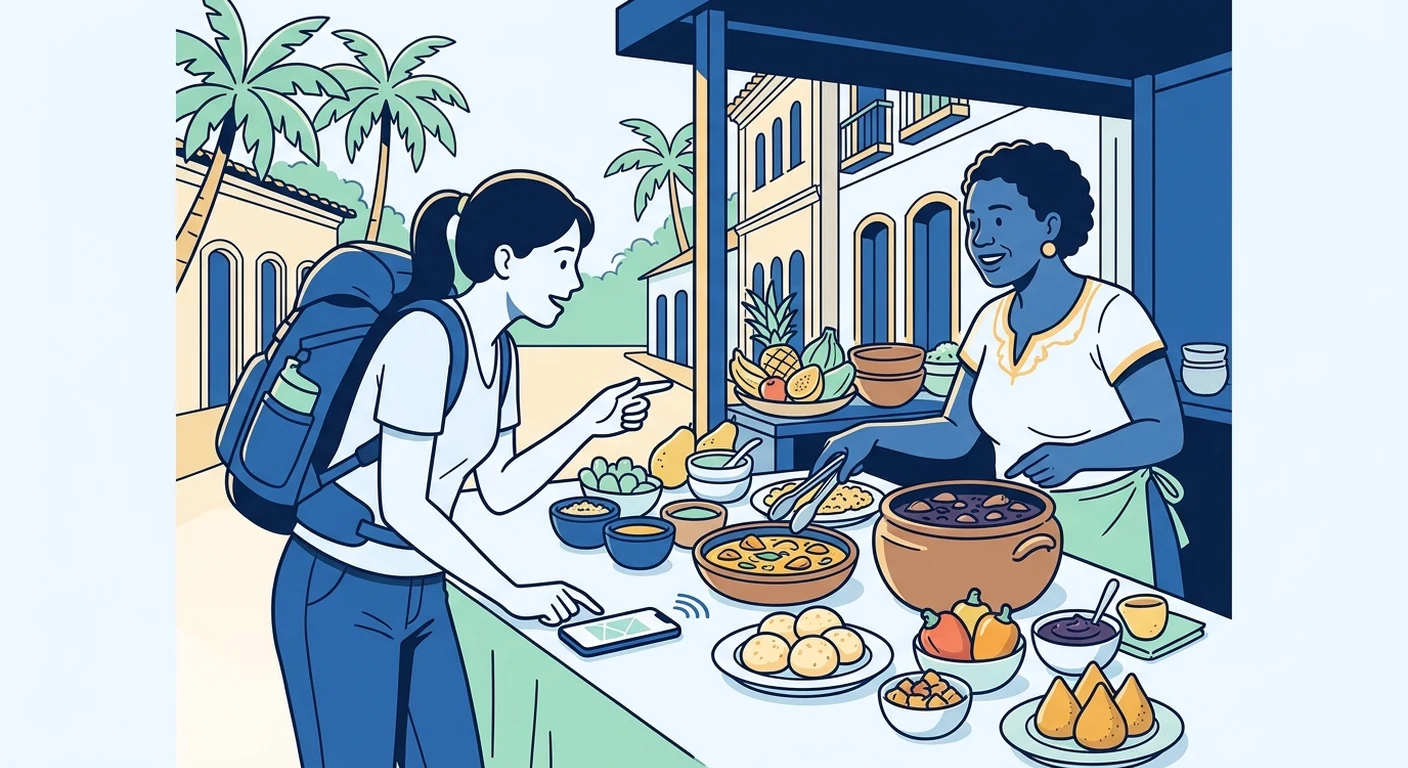
If you are travelling to Brazil, you will find a cuisine as diverse as the country itself, from the Afro-Brazilian flavours of Bahia to the gaucho-style barbecue of the south. This guide helps you understand representative foods, where different meal experiences fit into the day, dining customs, dietary communication, ordering and food-safety judgement. It is not an exhaustive list, but a practical starting point for eating well and navigating meals with confidence.
Iconic Brazilian Street Foods and Snacks
Street food is a daily ritual in Brazil, and you will see vendors and small kiosks selling snacks throughout cities like São Paulo and Salvador. A coxinha is a popular deep-fried dough filled with shredded chicken and sometimes cream cheese, shaped like a teardrop. Pastel is a thin, crispy pastry turnover that can be filled with meat, cheese, or vegetables, often sold at markets and fairs. Another iconic snack is pão de queijo, a small cheese bread made from tapioca flour, which is gluten-free and best eaten warm. These snacks are usually eaten in the mid-morning or mid-afternoon, and they are inexpensive and widely available.
Regional Specialties and Local Dishes
Brazil’s regional dishes reflect its history and geography. Feijoada, a hearty stew of black beans and pork, is often considered the national dish, and it is traditionally served on Saturdays with rice, collard greens, and orange slices. In the north, tacacá is a soup made from tucupi (a yellow broth from cassava), jambu leaves, and dried shrimp, and it is more common in the Amazon region. Moqueca is a fragrant fish stew with coconut milk, tomatoes, and coriander, and it is a specialty of the coastal states, especially Bahia and Espírito Santo. Churrasco refers to the Brazilian barbecue style, where large cuts of meat are roasted on skewers over open flames, often served rodízio-style, meaning waiters bring different meats to your table until you signal to stop. These dishes vary by region, so the version you find in one state may differ from another.
Popular Restaurants and Where to Eat
Dining options in Brazil range from high-end restaurants to casual eateries and street stalls. In São Paulo, you will find a mix of international and traditional Brazilian restaurants, from Japanese neighbourhoods to classic padarias (bakeries) that serve meals and snacks all day. In Salvador, the food scene is strongly influenced by Afro-Brazilian culture, with many places serving acarajé, a black-eyed pea fritter filled with shrimp and hot sauce, from street vendors and small establishments. For a quick, affordable lunch, look for a prato feito (or PF), a set meal that typically includes rice, beans, a protein, and a side salad. These are common in small restaurants called restaurantes populares or padarias, and they are a good way to eat like a local without spending much. When choosing where to eat, follow the crowds; busy places usually indicate fresh food and higher turnover.
Food Culture Tips for Travellers
Meal times in Brazil are generally later than in many other countries. Lunch, or almoço, is the main meal and usually happens between noon and 2 pm, and dinner, or jantar, is often served after 7 pm, sometimes later in cities. Breakfast is light, often just coffee with bread or fruit. Brazilians are generally warm and friendly, and it is common to greet the staff when entering a restaurant. Tipping is not mandatory; a 10% service charge is often added to the bill, and if it is not, you can leave a small amount if you are happy with the service. When ordering, it is helpful to know that many places offer a prato feito at lunch, which is a fixed-price meal. If you are unfamiliar with a dish, ask the waiter to explain; they are usually happy to help. Also, be aware that some restaurants may have a cover charge called couvert, which is for bread and appetisers that are brought to your table; you can decline them if you do not want them.
Dietary Communication and Food-Safety Judgement
Communicating dietary needs in Portuguese is important for a smooth experience. If you are vegetarian, say “sou vegetariano” (for men) or “sou vegetariana” (for women), and if you have a food allergy, learn the Portuguese word for it, such as “alergia a amendoim” for peanut allergy. For gluten-free, “sem glúten” is widely understood, and for vegan, “vegano” is increasingly recognised in urban areas. When it comes to food safety, use common sense: eat at places that look clean and have a steady flow of customers, and avoid raw or undercooked foods from street vendors if you have a sensitive stomach. Tap water is not generally recommended for drinking in Brazil, so stick to bottled water. Fruits that you peel yourself are usually safe, but be cautious with salads and raw vegetables, especially if you are not used to local water. If you are concerned about stomach issues, start with cooked foods and hot dishes, and avoid ice made from tap water. By being mindful and asking questions, you can enjoy Brazil’s rich food culture with confidence.