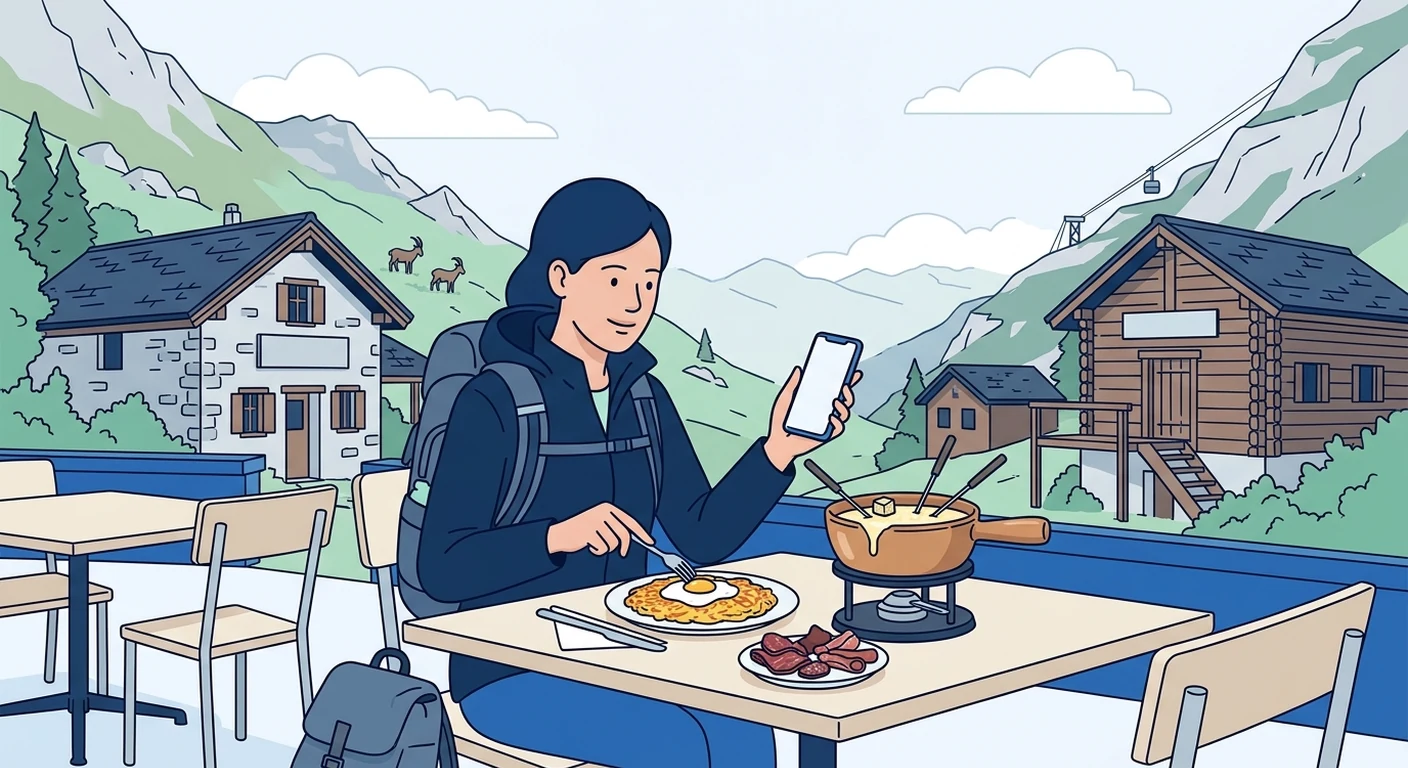
For Singapore-based travellers, eating well in Switzerland is less about finding familiar comfort food and more about knowing what to expect at the table. Swiss cuisine draws from French, Italian and German influences, so meals vary noticeably by region. This guide explains representative dishes, where different meal experiences fit, dining customs, dietary communication, ordering and food-safety judgement, so you can order with confidence whether you are in Zurich, Geneva or a mountain village.
Iconic Swiss Dishes You Must Try
Several dishes appear on menus across the country and are worth seeking out during your stay. Fondue is a pot of melted cheese, usually Gruyère and Emmental, served with bread cubes for dipping. Raclette involves scraping melted cheese onto potatoes, pickles and pearl onions. Rösti is a crispy potato cake often served as a side or with eggs and meat. Zürcher Geschnetzeltes, sliced veal in a creamy mushroom sauce, is a Zurich speciality. These dishes are hearty and filling, so plan lighter meals around them.
Street Food and Local Specialties
Street food in Switzerland is not as common as in Singapore, but you will find practical options at markets, fairs and train stations. Cervelat, a grilled sausage, is a popular snack, often served with bread and mustard. Bratwurst, particularly the St. Gallen variety, is another common choice. For something sweet, try a Läckerli, a spiced biscuit from Basel, or a piece of Swiss chocolate from a local chocolatier. These items are convenient for a quick bite between sightseeing, but they are not always portable, so check whether you need to sit down to eat.
Regional Flavors Across Switzerland
Because Switzerland borders France, Italy and Germany, regional kitchens differ noticeably. In the French-speaking west, you will find dishes like fondue and raclette, as well as influences from French cuisine, such as gratins and rich sauces. In the Italian-speaking south, near Ticino, polenta, risotto and pasta dishes are common, often with a Mediterranean touch. In the German-speaking east and centre, hearty fare like rösti, sausages and stews dominate. Alpine regions, especially Valais, are known for dried meats and cheeses. If you travel across the country, the food changes as much as the language, so it is worth sampling local specialities in each area.
Popular Restaurants and Dining Tips
Restaurant styles range from casual self-service eateries to formal dining rooms. In cities like Zurich, you will find everything from traditional Swiss restaurants to international options. For a relaxed meal, look for a Beizli or Wirtshaus, a casual pub-like restaurant serving local dishes. Many restaurants offer a fixed-price lunch menu (Menu or Tagesteller) that is often more affordable than ordering à la carte. Service charge is usually included in the bill, but rounding up the total is common if you are satisfied. Reservations are advisable for popular places, especially in the evening or during peak tourist season. Tap water is generally safe to drink, but it is not always served automatically; you may need to ask for it, and some places charge for bottled water.
Dining Customs and Tipping Etiquette
Swiss dining customs are straightforward but have a few nuances. When you enter a restaurant, wait to be seated unless there is a sign saying otherwise. It is customary to greet staff with a polite “Grüezi” in German-speaking areas, “Bonjour” in French-speaking areas, and “Buongiorno” in Italian-speaking areas. Tipping is not obligatory because a service charge is usually included, but leaving a small tip of 5-10 percent is appreciated for good service. You may be asked to pay at the counter rather than at the table, especially in casual places. Meals are often slower-paced than in Singapore, so allow more time for lunch or dinner. If you are in a hurry, look for self-service counters or takeaway options.
Dietary Communication and Food-Safety Judgement
Communicating dietary needs in Switzerland requires clarity, as menus are rarely labelled for allergens. If you are vegetarian, look for dishes like Älplermagronen (a pasta and potato gratin) or cheese-based options, but always ask if the dish contains meat broth or bacon. For halal or kosher requirements, note that pork is common in Swiss cuisine, so you should ask specifically about ingredients. If you have allergies, learn the local words for key allergens, such as “Erdnüsse” (peanuts) in German, “cacahuètes” in French, and “arachidi” in Italian. Regarding food safety, Switzerland has high hygiene standards, so street food and restaurant meals are generally safe. Still, use common judgement: check that hot food is served hot, cold items are chilled, and that any raw dairy products are clearly labelled as pasteurised if that matters to you. If you have a sensitive stomach, carry any medication you might need, as pharmacy access can be limited in remote areas.
Ordering and Paying for Meals
Ordering in Switzerland is similar to other European countries, but there are a few things to remember. In most restaurants, you can order in the local language, but English is widely understood in tourist areas and cities. When you are ready to pay, you may need to ask for the bill with phrases like “Zahlen, bitte” in German or “L'addition, s'il vous plaît” in French. Credit and debit cards are widely accepted, but some small establishments may prefer cash, especially in rural areas. If you are using a travel eSIM for mobile data, you can easily look up menus or translation apps while on the go, but note that connection can be patchy in remote mountain regions. For a smooth experience, keep some cash on hand for small purchases and check whether your card is accepted before ordering.