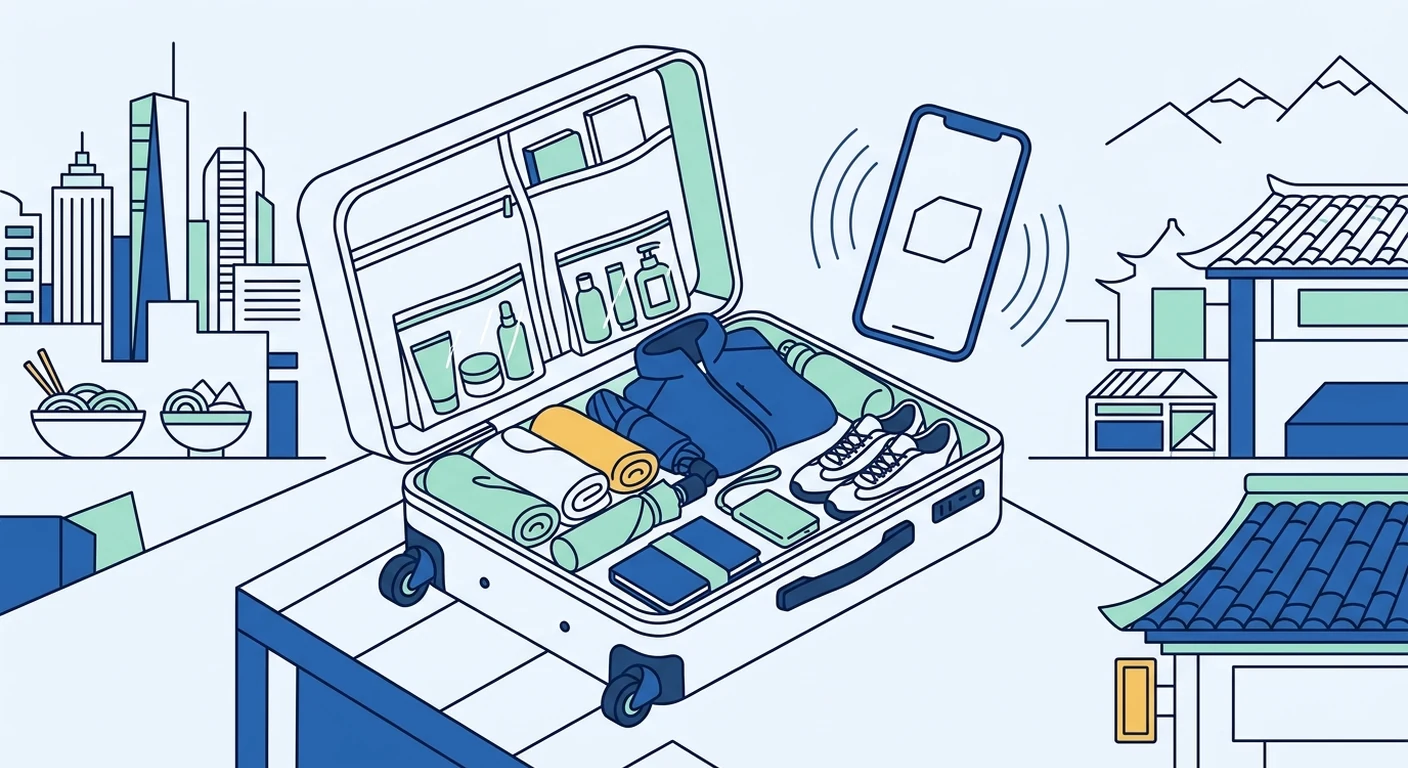
Packing for China from Singapore means preparing for a destination that is far more varied than our tropical island, with climates ranging from sub-zero winters in the north to mild, humid conditions in the south. Your packing plan should hinge on where you are going, when you are travelling, and what you plan to do, from climbing the Great Wall to exploring Chongqing's hilly streets. This guide gives you a practical, destination-specific checklist, covering clothing, essentials, electronics, and mobile connectivity, so you can travel with confidence and avoid the hassle of buying SIM cards after landing.
Clothing for China's Variable Climate
China's size means the weather you face depends heavily on your itinerary and the season. Northern cities like Beijing and Xi'an have distinct four seasons, with cold, dry winters and hot summers, while southern regions such as Guangzhou and Chongqing are warmer and more humid for most of the year. Before you pack, check the forecast for each city on your route, but also prepare for sudden temperature shifts, especially if you are travelling between regions. Layering is your best strategy: a lightweight base layer, a mid-layer like a fleece, and a waterproof outer shell can adapt to most conditions. For winter visits to the north, you will need a proper down jacket, thermal underwear, a warm hat, gloves, and a scarf, as indoor heating does not extend to outdoor sightseeing. In summer, choose breathable fabrics like cotton or linen, and always carry a light rain jacket or umbrella, as sudden downpours can occur in many cities.
For Northern Regions (Beijing, Xi'an, Inner Mongolia)
If your travels take you to Beijing, Xi'an, or Inner Mongolia, the packing list changes significantly depending on the season. In winter, temperatures in these areas can drop well below freezing, so a heavy winter coat, insulated boots, and thermal layers are non-negotiable. In contrast, summer in these northern regions can be surprisingly hot and dry, so light clothing and strong sun protection are more important than warm layers. Spring and autumn are pleasant but can be windy and dusty, especially in Inner Mongolia, where a dust mask and sunglasses will prove useful. If you plan to visit the Great Wall, note that the terrain is uneven and exposed to the elements, so sturdy footwear with good grip is essential. For Inner Mongolia, bring a windproof jacket even in summer, as the grasslands can be breezy and cooler than the cities.
Universal Essentials: Shoes, Documents, and Health Items
Comfortable walking shoes with excellent grip are the single most important item for any China trip, because you will walk far more than you expect, whether it is the hutongs of Beijing, the ramparts of Xi'an, or the steep staircases of Chongqing. Break them in before you leave Singapore to avoid blisters. Your essential travel documents include a passport with a valid Chinese visa (unless you qualify for visa-free transit), a printed copy of your hotel reservations, and travel insurance details. Keep digital copies on your phone as a backup. For health and wellness, pack a basic first-aid kit with plasters, antiseptic wipes, and pain relievers, plus any personal medication with a doctor's prescription. In China, pharmacy items may not be identical to what you use at home, so bring enough for your entire trip. Hand sanitiser and tissues are also useful, as public restrooms often lack soap and paper.
Essential Gear and Practical Items
Beyond clothing, a few practical items can make your trip smoother. A reusable water bottle is handy, but note that tap water is not safe to drink in China, so you will need to buy bottled water or use a purifier. A small daypack is essential for carrying your daily essentials, and a padlock is useful for securing your luggage in hostels or on overnight trains. For payment and money, while mobile payment apps like Alipay and WeChat Pay are ubiquitous, you should carry some Chinese Yuan (RMB) in cash for small vendors, street food, and rural areas where cards may not be accepted. Inform your bank about your travel plans, and have a mix of cash and cards. A money belt or neck pouch can keep your cash and passport safe in crowded places.
Electronics and Power: Charging and VPN-Ready Devices
China uses the same two-pin flat plugs as Singapore, so you will not need a universal adapter for most devices, but it is still wise to bring a power strip to charge multiple items at once, since hotel rooms may have limited outlets. A portable power bank is essential, especially if you rely on your phone for navigation and translation throughout the day. For connectivity, you will need a VPN-ready device, as many popular websites and apps (including Google, Facebook, and Instagram) are blocked in China. Install a reliable VPN on your phone and laptop before you depart, and test it while still in Singapore. Note that even with a VPN, some services may be slow, so have offline maps and translation apps as backups.
Digital Connectivity: The eSIM Advantage
For mobile data, an eSIM from TPG Mobile is a convenient way to stay connected without the hassle of buying a local SIM card upon arrival. With a travel eSIM, you can set up your data plan before leaving Singapore, and it activates automatically when you land in China, so you can start using navigation and translation apps immediately. This avoids the queues at airport kiosks and the language barrier of purchasing a local SIM. You can keep your usual Singapore SIM in your phone for WhatsApp and other services, while using the eSIM for data, helping you avoid expensive roaming charges. Remember that an eSIM provides data only, not a Chinese phone number, so for calls or SMS you will still need to rely on Wi-Fi calling or messaging apps. Before you travel, check that your phone is eSIM-compatible and follow the setup instructions provided by TPG Mobile, ideally while still in Singapore.
Final Packing Checklist for China
To bring it all together, here is a concise packing list tailored to China travel from Singapore. This is not exhaustive, but it covers the essentials that will keep you comfortable and prepared.
- Clothing: layered outfits suited to the season, a waterproof jacket, and a warm layer for northern regions.
- Footwear: comfortable walking shoes with excellent grip, plus a pair of lighter sandals or flats.
- Documents: passport, visa, printed hotel bookings, travel insurance, and a few passport photos.
- Health: personal medication, basic first-aid kit, hand sanitiser, and tissues.
- Money: Chinese Yuan cash, a credit or debit card, and a money belt.
- Electronics: universal plug (though China uses the same as Singapore), power bank, and a VPN-ready device.
- Connectivity: an eSIM data plan from TPG Mobile, activated before departure, so you can connect on arrival without hunting for a local SIM.
- Comfort items: a travel pillow, earplugs, and an eye mask for long train journeys.
With this packing plan, you can focus on enjoying your trip rather than worrying about what you forgot. The key is to tailor your list to your specific itinerary, season, and activities, and to prepare your mobile connectivity before you leave Singapore. By following this guide, you will be ready for the climate, culture, and practicalities of travelling in China, from the Great Wall to the streets of Chongqing.