For a Singapore-based traveller, eating in Egypt is both familiar and surprising. You will find the same love for legumes, rice and bold spices, but the dishes, the rhythm of meals and the way you order are distinctly Egyptian. This guide helps you understand the representative foods, where different meal experiences fit, how to communicate dietary needs, and how to judge food safety - without turning every meal into a research project.
Understanding the Egyptian Meal Rhythm
Egyptians eat later than many visitors expect. Lunch, often the main meal, typically happens between 2pm and 4pm, and dinner can be as late as 9pm or 10pm. Breakfast is lighter, often a simple spread of bread, cheese, olives and beans. If you are used to a Singapore-style dinner at 7pm, you may find many restaurants still empty early - that is normal. Street stalls and fast-food counters serve throughout the day, so you can always find something. For sit-down meals, plan your day around the local timing to avoid arriving at a kitchen that has just closed.
Iconic Street Food You Can't Miss
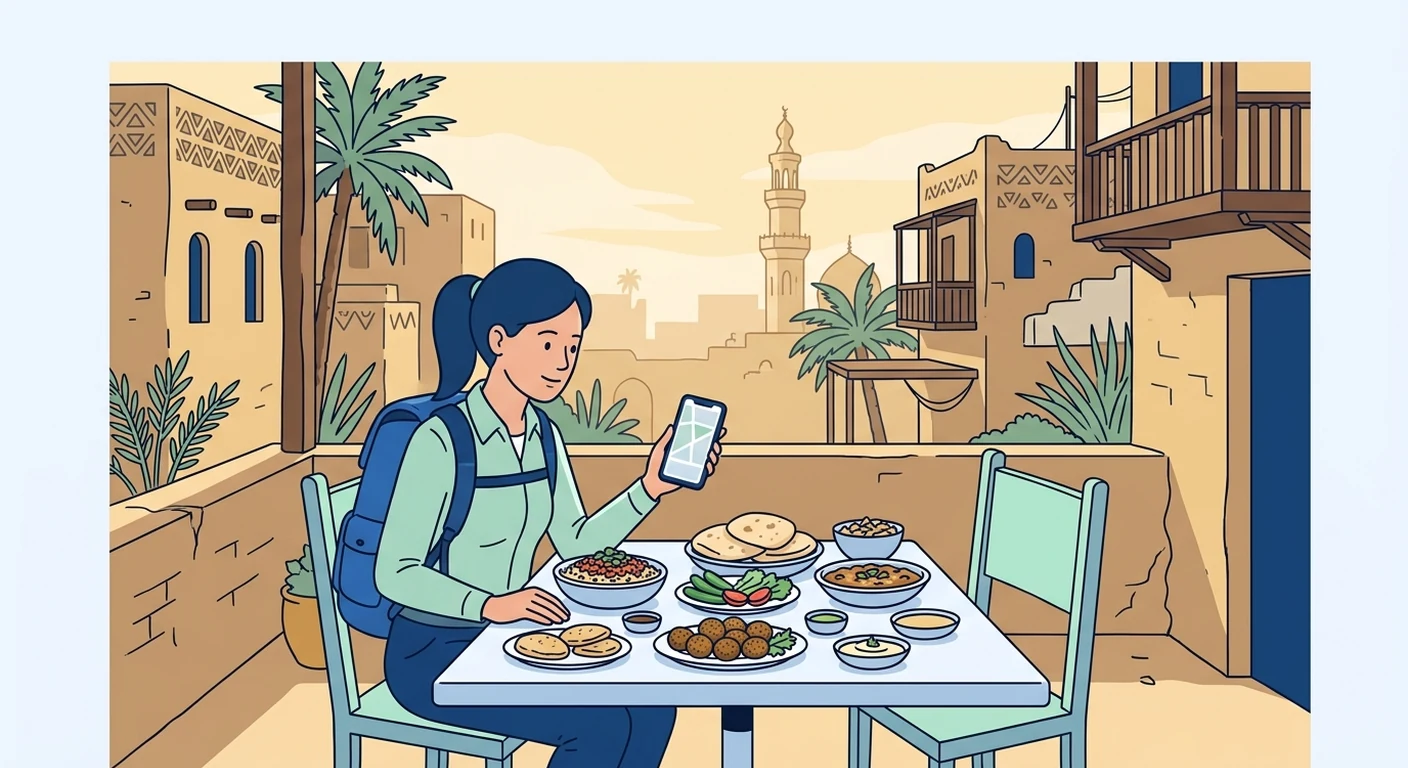
Street food is where you will meet Egypt's everyday flavours. Koshari, a hearty mix of rice, lentils, chickpeas and macaroni topped with crispy onions and a spiced tomato sauce, is a national staple. Abou Tarek in Cairo is a famous koshari specialist, and its queues are a good sign. Ta'ameya, the Egyptian falafel made from fava beans rather than chickpeas, is lighter and greener than the version you may know. Ful medames, slow-cooked fava beans seasoned with lemon, garlic and olive oil, is often eaten at breakfast with warm bread. These dishes are filling, cheap and widely available. If you are unsure where to start, choose a busy stall with a high turnover - it usually means fresher food and faster service.
Regional Specialties and Local Dishes
Beyond the street classics, each region of Egypt offers dishes tied to its geography and history. In Cairo and the Delta region, you will find molokhia, a green soup made from jute leaves, often served with rabbit or chicken and rice. Stuffed pigeon, known as hamam mahshi, is another Delta speciality - the bird is filled with seasoned rice or freekeh and roasted. Along the Alexandria coast, seafood takes centre stage. Grilled fish, calamari and shrimp are simple and excellent, often served with lemon, garlic and a side of rice. In Upper Egypt, around Aswan and Luxor, look for roz baladi, a local brown rice, and bamia, a okra stew with tomato sauce. Fatta, a layered dish of rice, bread and meat with a garlicky vinegar sauce, is often served at celebrations but appears on many restaurant menus. Each dish tells you something about the place - try one regional speciality in each city you visit.
How to Order and Communicate Dietary Needs
English is spoken in tourist areas, but a few Arabic phrases help. To say 'without meat', use 'bedoon lahma'. For 'vegetarian', say 'nabati'. If you need to avoid garlic or onion, say 'bedoon toom' or 'bedoon basal'. Most waiters in tourist restaurants understand these words, but in smaller local eateries, pointing at a dish and asking 'fee lahma?' (is there meat?) is a practical approach. Egypt is a Muslim-majority country, so pork is rare and usually absent from menus. If you have a gluten sensitivity, note that bread is central to most meals, and wheat is used in many dishes - ask for rice-based alternatives where possible. When ordering, remember that meals are often shared family-style. A single main dish may be enough for two people if you also order a salad or soup. Do not be shy to ask for a half portion or 'noss hosaa' - many places will oblige.
Dining Customs and Practical Etiquette
Egyptian dining customs are warm and hospitable, but they have a few unspoken rules. If you are invited to an Egyptian home, bring a small gift such as sweets or fruit. You will often be offered tea or coffee immediately - accepting is polite, even if you take just a few sips. When eating with hands, use only the right hand; the left is considered unclean in traditional settings. Bread is used to scoop food, and it is common to tear it rather than cut it. Tipping, or 'baksheesh', is expected in restaurants - a 10% service charge may already be added, but a small extra tip of 5 to 10 Egyptian pounds is appreciated for good service. In more formal restaurants, dress smart-casual; in street stalls, anything goes. If you are unsure, watch what locals do - they will guide you without you having to ask.
Food-Safety Judgement for a Smooth Trip
Food safety in Egypt requires a sensible judgement rather than fear. The main risk is 'traveller's stomach', often caused by bacteria in water or unwashed produce. Drink only bottled or filtered water, and use it even for brushing teeth. Avoid ice in drinks unless you are confident it is made from purified water. Peel fruits yourself, and skip salads that have been washed in tap water. Hot, freshly cooked food is generally safe - the heat kills most pathogens. Street food is fine if you see it being cooked in front of you and the stall is busy. Avoid anything that has been sitting out for hours, especially cooked rice or sauces. If you have a sensitive stomach, start with simple dishes like grilled fish or koshari, and gradually introduce more complex meals. Carry oral rehydration salts from Singapore just in case - they are cheap and take no space. With these precautions, you can enjoy Egypt's food without spending your holiday near a bathroom.