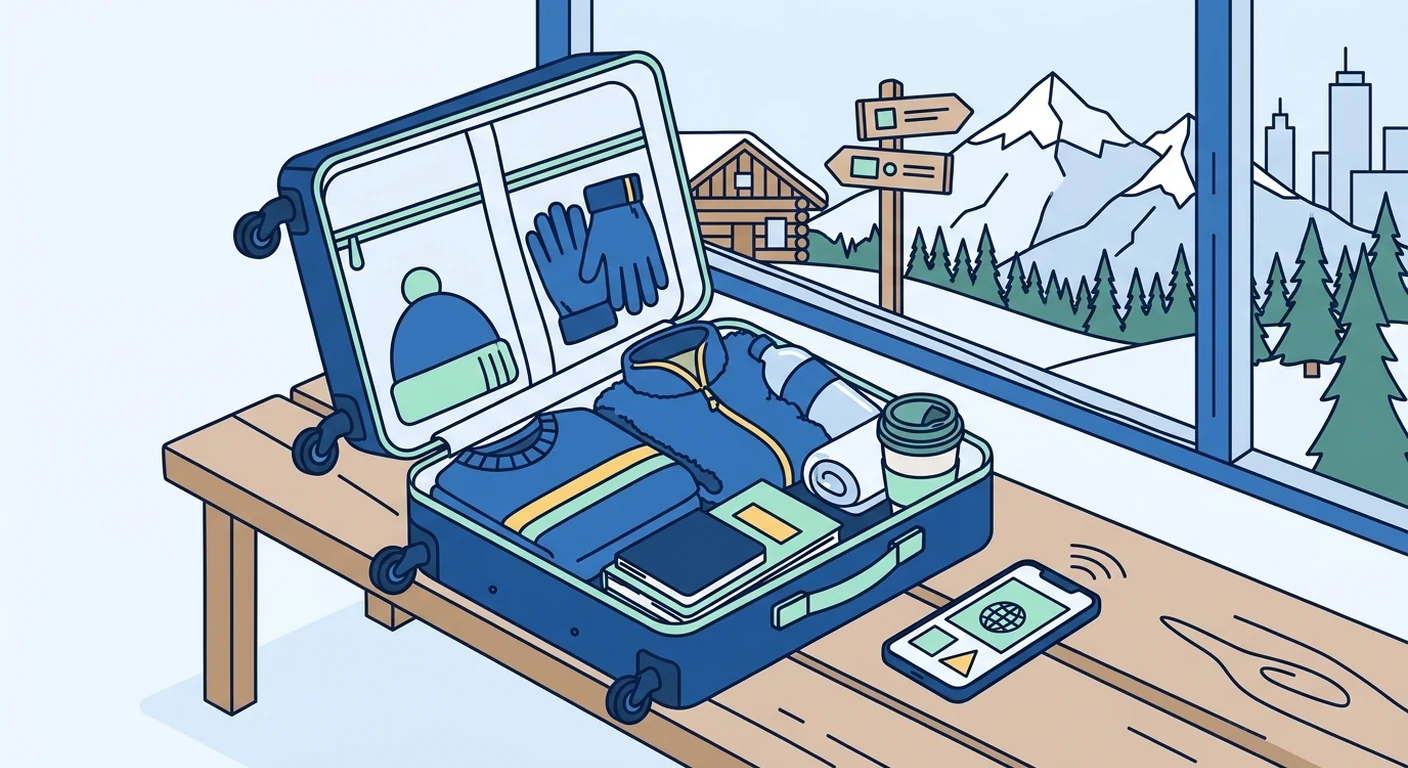
Packing for Canada from Singapore means preparing for dramatic climate contrasts, whether you are visiting in the snowy depths of winter or the mild months of summer. Your suitcase should revolve around layers, weatherproof gear, and practical items that keep you comfortable from Vancouver's rainy coast to Banff's alpine trails. This guide focuses on climate-appropriate clothing, essential gear, documents, health items, and staying connected with a travel eSIM, so you can travel with confidence and without overpacking.
Understanding Canada's Climate and Your Packing Strategy
Canada is vast, and its weather varies hugely by region and season. The west coast, including Vancouver, has mild, wet winters and pleasant summers, while inland areas like Banff experience cold winters with heavy snow and warm, short summers. Before you start packing, check the forecast for each city on your itinerary, as conditions can change quickly. The key is to build a capsule wardrobe with layers that you can add or remove, rather than packing separate outfits for every possible day. This approach works for both a city break and an outdoor adventure, and it saves valuable luggage space.
Clothing Essentials for Changing Seasons
For winter travel (November to March), a thermal base layer, a mid-layer fleece or wool sweater, and a waterproof, insulated outer jacket are non-negotiable. Add a warm hat, gloves, and a scarf, as temperatures can drop well below freezing, especially in the Rockies. In summer (April to October), pack lightweight, breathable fabrics like cotton or linen, but always include a light rain jacket or umbrella, particularly for Vancouver. A pair of comfortable walking shoes is essential for city exploring, while sturdy, waterproof boots are a must if you plan to hike or walk on snowy or muddy trails. Remember that indoor spaces in Canada are often heated, so dressing in layers lets you adjust easily.
Gear and Outdoor Equipment for City and Trail
If you are heading to Banff or any national park, invest in proper hiking gear: moisture-wicking socks, a daypack, and a reusable water bottle. A portable charger is also wise, as cold weather drains phone batteries faster, and you will likely use your phone for maps and photos. For city days, a compact daypack is useful for carrying layers, snacks, and souvenirs. If you are into photography, protect your camera gear with a weatherproof bag and lens cloths to handle rain or snow. A water bottle not only keeps you hydrated but also reduces plastic waste, and many Canadian cities have clean tap water. These items are practical for both urban and outdoor settings, so you won't need to pack twice.
Documents and Travel Necessities
Your passport must be valid for the duration of your stay, and depending on your nationality, you may need an Electronic Travel Authorization (eTA) or a visitor visa, so check the official Canadian immigration website well in advance. Carry printed copies of your flight itinerary, hotel confirmations, and travel insurance documents, even though you may have digital versions. It is also wise to have a physical credit card as a backup, as some smaller businesses may not accept contactless payments. Keep these documents in a secure, waterproof pouch, and store a photocopy separately in case of loss or theft. Having everything organised before departure reduces stress and helps you handle unexpected situations smoothly.
Health Items and Practical Tips
Pack any prescription medications in their original packaging, along with a copy of your prescription, and bring a basic first-aid kit with plasters, pain relievers, and motion sickness tablets. If you are travelling in winter, lip balm, moisturiser, and sunscreen are essential, as cold, dry air and sun reflection off snow can damage your skin. For outdoor activities, insect repellent is useful in summer months, especially in forested areas. Practical tips include packing a small umbrella, a reusable shopping bag, and a travel adapter for Canada's Type A and B power outlets. These small items make a big difference to your comfort, and they are easy to slip into your daypack.
Staying Connected with a Travel eSIM
For mobile connectivity, a travel eSIM from a provider like TPG Mobile offers a convenient way to stay online without relying on expensive roaming charges. You can purchase and install the eSIM before you leave Singapore, then activate it on arrival in Canada, keeping your usual Singapore SIM card in your phone for calls and messages. This means you can use maps, translation apps, and booking confirmations immediately, without hunting for a local SIM card or Wi-Fi hotspot. Check your phone's compatibility with eSIM technology, and choose a data plan that suits your usage, whether you need light browsing or heavy data for streaming and social media. Having reliable mobile data gives you peace of mind, especially in remote areas like Banff where Wi-Fi may be limited.
Final Packing Tips for a Smooth Trip
To avoid overpacking, lay out everything you think you need and then remove items you are unlikely to use. Roll your clothes to save space and reduce wrinkles, and use packing cubes to keep your suitcase organised. Weigh your bag at home to avoid airline baggage fees, and check your airline's luggage allowance in advance. When travelling between cities, consider packing a small overnight bag for shorter trips, so you don't have to haul your main suitcase around. Finally, leave a little extra space in your luggage for souvenirs, and remember that you can always buy forgotten items locally, from pharmacies to outdoor stores. With this climate-smart packing plan, you can focus on enjoying Canada's stunning landscapes and vibrant cities, rather than worrying about what you forgot.