Packing for Switzerland means preparing for dramatic shifts in weather, from balmy lakefront afternoons to snowy Alpine passes, sometimes within the same day. Your plan should centre on versatile layers, sturdy footwear, and the right adapters, plus a reliable way to stay connected while you travel. This guide breaks down what to bring and why it matters, so you can pack with confidence and avoid last-minute purchases at inflated resort prices.
Clothing and Footwear Essentials: Mastering the Layers
Switzerland's climate is famously changeable, especially in the mountains. A lightweight, waterproof and windproof jacket is non-negotiable, as sudden rain or snow can appear without warning. Underneath, pack several thin layers-merino wool or synthetic base layers work well-rather than one thick jumper, because you can add or remove them as temperatures shift from valley to summit. For footwear, bring comfortable, broken-in walking shoes or hiking boots with good grip; even if you stick to cities like Zurich or Bern, you will likely walk on cobblestones and uneven paths. If you plan to visit high peaks such as the Jungfrau region, consider insulated, waterproof boots that cover your ankles, as snow can linger well into spring.
Documents, Money, and Connectivity: Staying Organised and Online
Carry your passport, travel insurance details, and any necessary visas in a secure, easily accessible pouch. Switzerland uses the Swiss franc (CHF), and while cards are accepted almost everywhere, it is wise to have some cash for small vendors or mountain huts. For connectivity, a travel eSIM from a provider like TPG Mobile lets you activate a data plan before you leave Singapore, so you can connect the moment you land in Geneva or Zurich. Keep your usual Singapore SIM in your phone for calls and messages, and use the eSIM for data to avoid hefty roaming charges. Remember to download offline maps and translation apps before departure, as some remote areas have limited signal.
Health and Personal Care Items: Preparing for Altitude and Sun
Altitude sickness is a real consideration if you travel above 2,500 metres, such as at the Jungfraujoch or on Alpine passes. Pack any prescribed medications, plus a small kit with pain relievers, motion sickness tablets, and electrolyte sachets to help with dehydration. Sun protection is essential even in winter because UV intensity increases with altitude, and snow reflects sunlight strongly. Bring sunglasses with high UV protection, lip balm with SPF, and sunscreen-these are often overpriced in resort areas. If you have allergies, carry antihistamines, as hay fever can be bothersome in spring and summer. A basic first-aid kit with plasters, antiseptic wipes, and blister cushions will save you from a painful hike.
Adapters, Gear, and Practical Items: Powering Up in Swiss Style
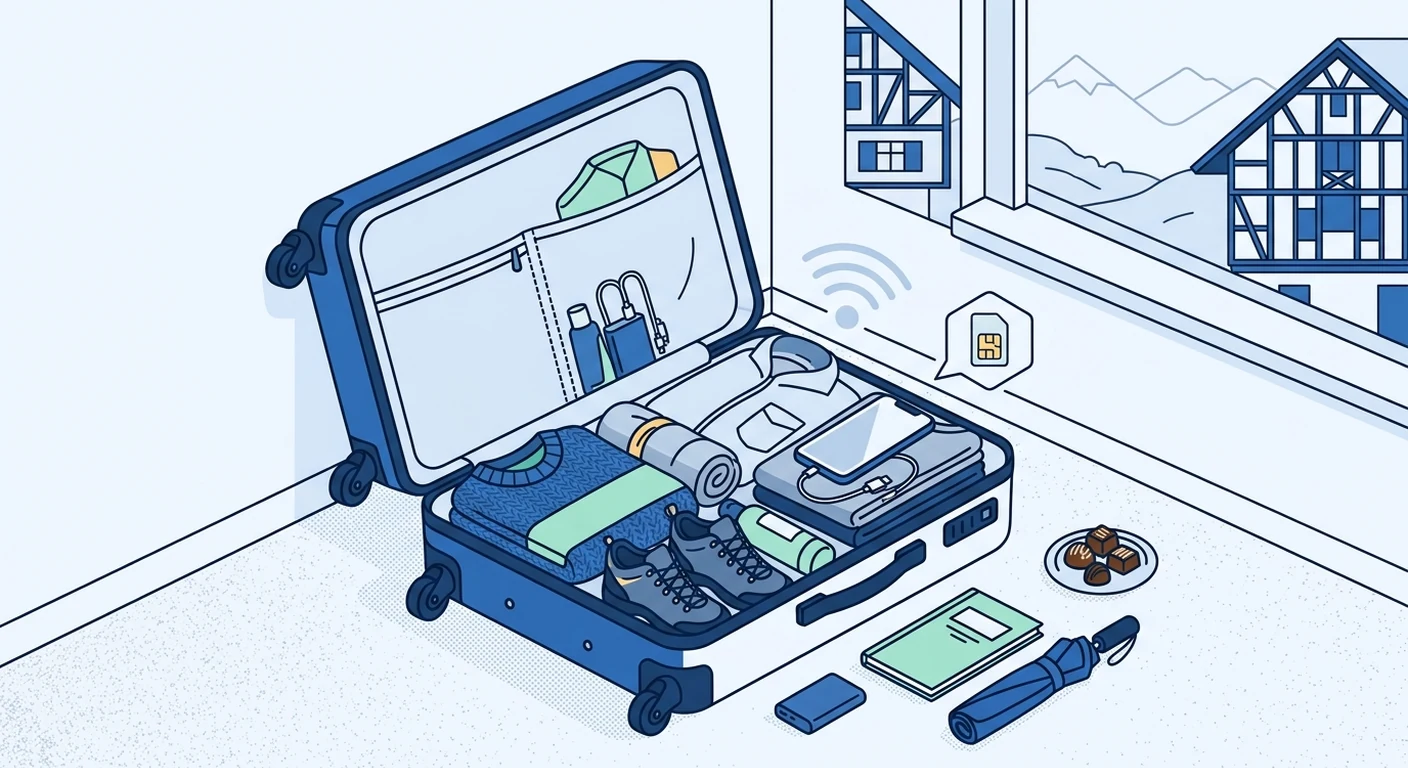
Switzerland uses the J-type plug with three round pins, so bring a universal adapter that includes this configuration. The standard voltage is 230V, matching Singapore's supply, so you will not need a voltage converter for most devices, but check chargers for compatibility. A portable power bank is practical for long days of sightseeing or hiking, especially when using your mobile phone for navigation and photos. If you plan to visit lakes like Lake Geneva or Interlaken, a dry bag protects electronics and valuables during boat trips or water activities. A lightweight daypack with a rain cover is useful for carrying layers, water, and snacks, and it doubles as a hand luggage bag for short excursions.
Switzerland's Seasonal Specifics: Packing for the Right Time of Year
Your packing list should adapt to the season of your visit. In winter (December to February), thermal underwear, a warm hat, gloves, and a scarf are essential for cities and slopes alike. Spring (March to May) brings unpredictable weather, so include an extra layer and an umbrella. Summer (June to August) can be warm in low-lying areas like Zurich or Geneva, but mountain temperatures drop quickly, so a fleece or insulated jacket is still necessary for higher elevations. Autumn (September to November) is crisp and often rainy, with beautiful foliage-pack a waterproof shell and comfortable boots for trail walks. Regardless of season, always carry a refillable water bottle; Switzerland's tap water is safe and excellent, and you can fill up at public fountains in most towns.
Mobile Connectivity and eSIM Setup: Your Pre-Departure Checklist
Before you leave Singapore, set up your travel eSIM so that it is ready to activate upon arrival. TPG Mobile, as a travel eSIM storefront, offers data plans for Switzerland that you can purchase online and install on your mobile phone. The process usually involves scanning a QR code or entering an activation code, and you can do this while still connected to Wi-Fi at home. Keep your primary SIM card active in your phone for calls and SMS, and use the eSIM for data-this is a straightforward way to manage costs and avoid roaming surprises. If you have a dual-SIM phone, assign the eSIM for data and your usual SIM for voice. On arrival, enable the eSIM and check that it connects to a local network; if not, restart your phone or manually select a network from the settings menu. This small preparation means you can step off the plane in Zurich, open your maps, and start your Swiss adventure without hunting for a local SIM shop.